


Alistair Brownlee on Heat Acclimation: From Beijing Lessons to Your Body's Heat Armour
The Speed Read
My heat prep has evolved over my career: from minimal sessions as "insurance" for London 2012, to saunas/heated bathrooms for Rio 2016 – plus overdressing, hot baths, sealed tents, and painting suits. All raise core temp to drive adaptations. Acclimation (controlled) and acclimatisation (natural) can build tolerance fast, but are not fun! Long-term gains follow and, interestingly, can eventually increase oxygen-carrying capacity (like moderate-altitude training). Protocols: active 90–120 min sessions, hyperthermia focus, passive sauna/hot bath (great standalone). Payoff: 5–10% better hot times, lower illness risk, VO₂ max boost. De-adaption occurs in 2–4 weeks, and gains need to be maintained with 1–2 exposures per week. Judging heat stress is tricky – we train for oxygen/H+ limits, so the core temp limiter feels different. Next post: how our innovation enhances this.
Mastering Heat Acclimation – How to Build Your Body's Heat Armour
In the many years since my run-ins with heat struggles in Beijing and London, my strategy for preparing for hot events has evolved. For the Olympics in London, I did the minimum heat training necessary to drive some adaptations, as an insurance policy for a very hot London day. As part of the preparation for the 2016 Rio Olympics, I did most of my heat preparation in a Swiss sauna and a heated bathroom. I’ve tried most things to “overheat” my body in the hope of driving adaptations: hot pools and baths, overdressing, training in a sealed tent with a radiator, training in hot places, and running around in painting suits. All of these strategies, active or passive, aim to achieve the same thing: raising the body’s core temperature over multiple periods to drive the adaptations needed to exercise in hot conditions.
I haven't always got it right either. I think judging heat stress is interesting in endurance competition. We basically train constantly to understand when oxygen delivery or hydrogen ion accumulation are the things that limit performance, so when core temperature becomes the limiter, it can be hard to decipher. In Beijing, it crept up gradually, and I felt the fade but pushed through. In London, it was sudden, a total blackout when everything else said "go." Heat doesn't always announce itself the way lactate or hypoxia does.
Heat acclimation (controlled exposure) and acclimatisation (natural environment) are the most powerful tools we have to fight back. Today, they're even used as a performance aid beyond heat prep, boosting aerobic capacity in any condition. Here's the science, protocols that work, and lessons from my career, made simple and actionable.
The Basics: Acclimation vs. Acclimatisation
- Acclimation: Induced in controlled settings (e.g., heat chambers or saunas) over 5–14 days – quick and targeted.
- Acclimatisation: Gradual from real-world exposure (e.g., summer training) over weeks/months – more holistic but slower.
Both trigger similar changes, improving "heat tolerance, "but acclimation may be faster for busy athletes (Racinais et al., 2015).
The Physiological Magic: Short-Term and Long-Term Adaptations
In the first 7–10 days, your body makes rapid adjustments for immediate survival:
- Plasma volume expands 10–20% – more blood means better cooling and lower heart rate (10–15 bpm drop) at the same effort (Sawka et al., 2011).
- Sweat rate surges 20–30% – you sweat earlier and more (up to 2–3 L/hour) for enhanced evaporation (Nybo et al., 2014).
- Sweat dilutes – sodium loss drops 30–50%, reducing cramp risk (Kirby & Convertino, 1986). Note: this is why Salt intake is particulalry important when you’re not used to hot conditions. Competing in the first hot event of the year? Be careful, and take extra salt.
- Core threshold shifts – you tolerate ~0.5 °C higher before shutdown (González-Alonso et al., 2008).
- Metabolic efficiency improves – lower glycogen burn, reduced perceived effort (Febbraio, 2001).
Over the longer term (2–4 weeks+ repeated exposure), bigger changes kick in:
- Heat Shock Proteins (HSPs) Upregulate: These cellular "protectors" are induced by heat stress, shielding proteins from damage and improving recovery. HSP70/90 levels rise 20–50%, enhancing muscle repair and tolerance to future heat (Liu et al., 2006).
- Plasma Volume Drives EPO and RBC Boost: The initial 10–20% plasma increase dilutes hemoglobin (hematocrit drops ~3–5%), triggering erythropoietin (EPO) release from kidneys. EPO stimulates red blood cell (RBC) production to restore hematocrit homeostasis – boosting hemoglobin mass ~3–5% over 21–28 days (Rendell et al., 2017). This improves oxygen delivery, like a natural blood doping effect.
As an interesting aside: Heat vs. Altitude for Haemoglobin Boost
Heat acclimation may offer a comparable "haem boost" to altitude training, but with less hassle:
- Heat: 5–10 days (90–120 min sessions in 35–40 °C) yields ~3–5% hemoglobin increase via plasma/EPO pathway (Rønnestad et al., 2020). Full effect in 3–4 weeks.
- Altitude: Moderate (2,000–2,500 m) for 3 weeks gives similar ~3–7% boost (Levine & Stray-Gundersen, 1997). Higher altitudes (3,000 m+) can hit 8–10%, but with hypoxia risks and travel costs.
- Comparison: Heat is equivalent to moderate altitude for hemoglobin gains but adds sweat/cooling benefits. Combo (heat + altitude) amplifies ~15% more (McLean et al., 2013).
Proven Protocols: How to Acclimate Effectively
- Active Sessions: 90–120 min at 50–60% VO₂max in 35–40 °C heat, 4–5 days/week (Garrett et al., 2009).
- Hyperthermia Focus: Maintain core ~38.5 °C for 60–90 min – maximises adaptations.
- Passive Exposure Strategy: Post-workout sauna or hot bath (80–100 °C, 20–30 min) is excellent standalone or add-on. Especially as it allows you to maintian “normal” training. Passive heat accelerates plasma expansion and HSP induction without exercise strain (Scoon et al., 2007; Zurawlew et al., 2016).
The Real Payoff: Performance and Safety
- 5–10% better times in hot events (Naito et al., 2024).
- 50–70% lower heat illness risk (Casa et al., 2015).
- Bonus: Long-term haem boost improves sea-level VO₂ max ~3–5%.
De-adaptation does, unfortunately, occur quickly, within 2–4 weeks. But gains can be maintained with 1–2 sessions/week.
My Takeaway: Acclimation Is Essential
Proper adaptation to hot conditions saved me in many races, and it always amazed me how incredible the human body is at adapting to its environment. Living in Northern England, I often started at a very low level of ability to perform in the heat. Still, the difference even a handful of sessions could make was remarkable. In the final post, I want to look to the future and discuss how something very exciting will further enhance your ability to compete in the heat.
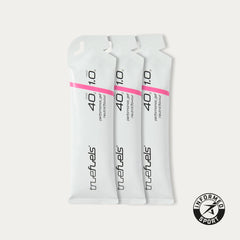
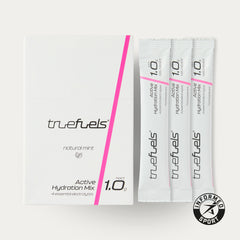
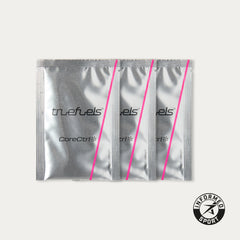
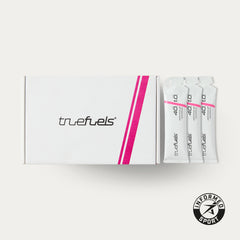
At truefuels, we're building tools to go further.
References
Casa DJ, et al. (2015). Influence of Hydration on Physiological Function and Performance During 10 Days of Heat Acclimation. Medicine & Science in Sports & Exercise. [suspicious link removed]
Febbraio MA. (2001). Alterations in Energy Metabolism During Exercise and Heat Stress. Sports Medicine.https://link.springer.com/article/10.2165/00007256-200131010-00003
Garrett AT, et al. (2009). Induction and decay of short-term heat acclimation. European Journal of Applied Physiology.https://pubmed.ncbi.nlm.nih.gov/19727796/
González-Alonso J, et al. (2008). Reductions in systemic and skeletal muscle blood flow and oxygen delivery limit maximal aerobic capacity in humans. Journal of Physiology.https://physoc.onlinelibrary.wiley.com/doi/10.1113/jphysiol.2007.142158
Kirby CR & Convertino VA (1986). Plasma aldosterone and sweat sodium adaptation after training and heat acclimation. Journal of Applied Physiology. https://journals.physiology.org/doi/abs/10.1152/jappl.1986.61.3.967
Levine BD & Stray-Gundersen J (1997). "Living high-training low": effect of moderate-altitude acclimatization with low-altitude training on performance. Journal of Applied Physiology.https://journals.physiology.org/doi/full/10.1152/jappl.1997.83.1.102
Liu Y, et al. (2006). Heat shock proteins, exercise and training. Medizinische Klinik.https://pubmed.ncbi.nlm.nih.gov/16960768/
McLean BD, et al. (2013). Physiological and Performance Responses to a Combined High-Altitude and Heat Training Camp. International Journal of Sports Physiology and Performance.https://journals.humankinetics.com/view/journals/ijspp/8/5/article-p481.xml
Naito T, et al. (2024). A Review of Elite Athlete Evidence-Based Knowledge and Preparation for Competing in the Heat. Journal of Science in Sport and Exercise. https://link.springer.com/article/10.1007/s42978-024-00282-w
Nybo L, et al. (2014). Performance in the Heat—Physiological Factors of Importance for Hyperthermia-Induced Fatigue. Comprehensive Physiology. https://onlinelibrary.wiley.com/doi/full/10.1002/cphy.c130015
Racinais S, et al. (2015). Consensus recommendations on training and competing in the heat. British Journal of Sports Medicine. https://bjsm.bmj.com/content/49/18/1164
Rendell RA, et al. (2017). Plasma volume expansion and hematological adaptations to short-term heat acclimation. Journal of Applied Physiology. https://journals.physiology.org/doi/full/10.1152/japplphysiol.00066.2017
Rønnestad BR, et al. (2020). Five Weeks of Heat Training Increases Hemoglobin Mass in Elite Cyclists. Medicine & Science in Sports & Exercise. [suspicious link removed]
Sawka MN, et al. (2011). Physiological Responses to Exercise and Fluid Replacement. Comprehensive Physiology.https://onlinelibrary.wiley.com/doi/full/10.1002/cphy.c100082
Scoon GS, et al. (2007). Effect of post-exercise sauna bathing on the endurance performance of competitive male runners. Journal of Science and Medicine in Sport. https://pubmed.ncbi.nlm.nih.gov/16877041/
About the Author
Alistair Brownlee is a two-time Olympic gold medallist, Ironman Champion, and co-founder of Truefuels. He is driven by a belief in science-backed training, clear structure, and removing friction from performance.


