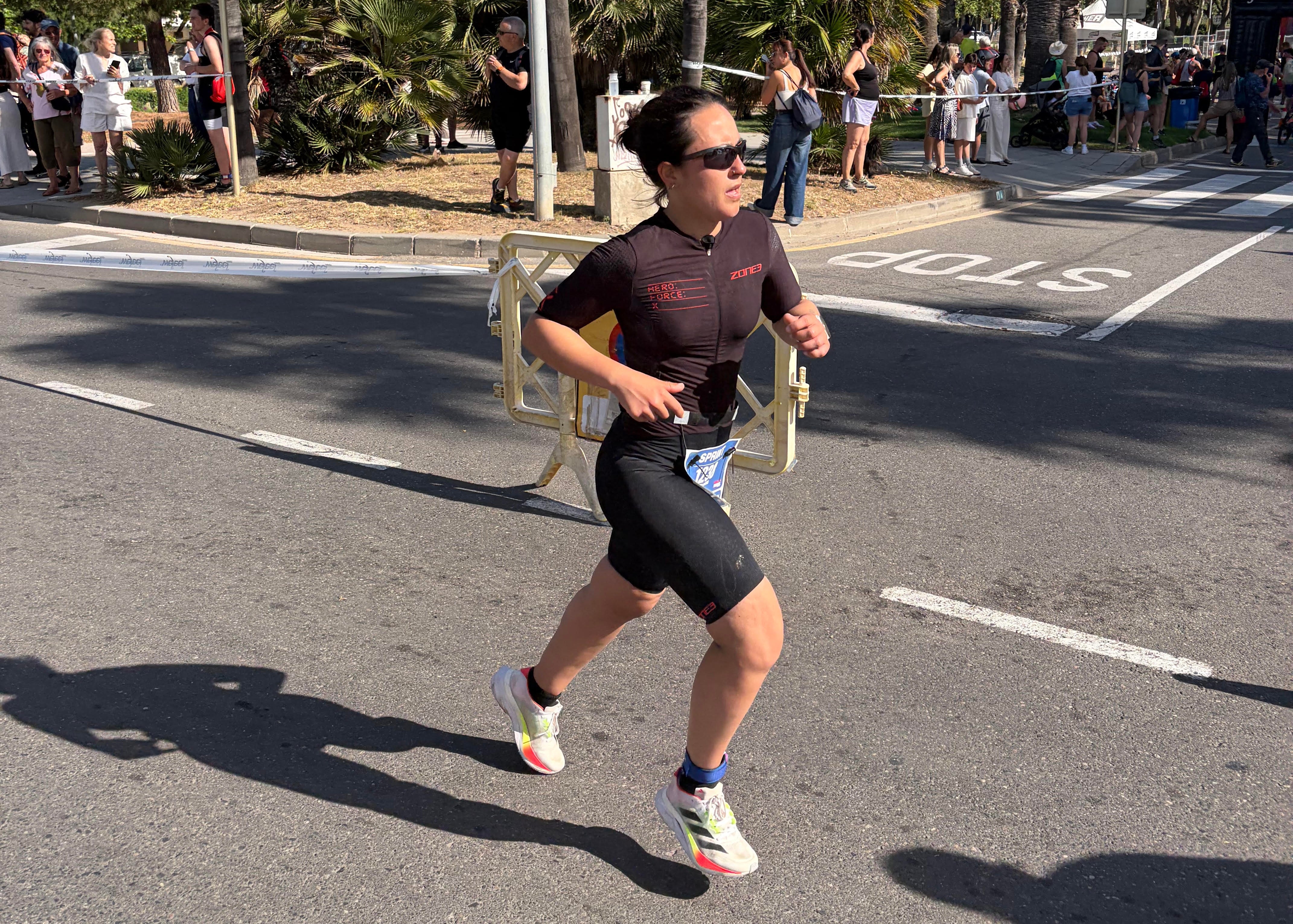
Before the Start Line
Race day is the part of triathlon we see.
The swim. The bike. The run. The finish line.
But what we don't see is everything that happens before the starting gun.
The early mornings. The meals between training sessions. The nights spent recovering. The decisions about what to eat, what to drink and when to fuel.
Performance isn't built in a single session. It is built in everything you do between them.
The foundations
For me, good nutrition starts with everyday food.
I try to eat a varied and balanced diet, making sure I am eating enough to support both training and recovery. Gels, drinks and other sports products have their place, particularly around training and racing, but they are only one part of the bigger picture.
The same is true of sleep. I try to protect my sleep and maintain a consistent routine because recovery is where the body gets the opportunity to respond to training. During sleep, muscle tissue is repaired, energy stores are restored and important processes involved in immune and hormonal function take place.
Sleep isn't time away from training. It is part of the training.
Race morning
Race mornings are different. You wake up earlier than usual. You are nervous. Your routine changes. And sometimes you simply don't sleep as well as you normally would.
I usually train early in the morning, so waking up early to train is already part of my routine. For my race, I woke up early and had breakfast at around 5:30 am.
Importantly, it was my normal breakfast: toast with cottage cheese, banana and honey.
I didn't experiment with anything new. That was deliberate.
Race morning isn't the time to discover whether your stomach agrees with a new food or nutrition strategy. By then, the important decisions should already have been made.
And although the night before a race is often the night athletes worry about most, one shorter or more restless night doesn't necessarily undo weeks of good preparation.
You can't always control how well you sleep the night before a race. You can control the habits you build beforehand.
Keeping race nutrition simple
For this race, I kept my nutrition strategy simple and familiar. After the swim, I had a banana before starting the bike.
During the race, I used two truefuels gels, each providing 40 g of carbohydrate + 1 g of NaCl one during the bike and the second at the start of the run. I already knew that I tolerated these gels well, so there was no reason to introduce anything new on race day.
On the bike, I also carried two bottles: one with water and one with truefuels electrolytes. This gave me a simple way to stay hydrated while also replacing electrolytes during the race.
Knowing what works for your body can be just as important as having a nutrition plan.
The best race nutrition strategy isn't necessarily the most complicated one. It is one that matches the demands of the event and the individual athlete, while being realistic and well tolerated. And that is why nutrition needs to be considered before race day.
Training the gut
During endurance exercise, particularly as intensity increases, gastrointestinal symptoms can become a limiting factor. Bloating, nausea or difficulty tolerating carbohydrate can make it difficult to take in the fuel an athlete needs.
This is where the idea of gut training becomes interesting. Taking a gel during an easy training session is very different from taking one while cycling hard and then running off the bike. Your digestive system is part of the performance system.
You are not only training your muscles to perform. You are also teaching your body to fuel that performance.
Recovery is part of performance
What happens after training matters just as much as what happens during it.
A varied diet provides the energy, carbohydrate, protein, fats, vitamins and minerals needed to support training and recovery. Rather than looking for one perfect recovery food, I think about recovery as something that happens consistently throughout the day.
And then there is sleep. Good-quality sleep supports the processes involved in recovery, adaptation and readiness for the next session.
For me, that makes sleep much more than something to fit around training.
It is part of the training plan.
Another piece of the puzzle
As a female athlete, the menstrual cycle has always been part of my training. But I think you become more aware of how your body responds as you get older and your life becomes more demanding.
When training is combined with work, daily responsibilities and everything else life brings, finding the right balance becomes increasingly important. You start to notice the signals your body gives you changes in energy, appetite, sleep, recovery or how you feel during training.
Women and men share many fundamental physiological processes, but there are also important biological differences that can influence how the body responds to exercise, nutrition and recovery. Yet, for many years, sports science has relied heavily on research conducted in male athletes, with women often underrepresented. As a result, we still have much to learn about how to best support female athletes (Elliott-Sale et al.,2021).
A recent review looked specifically at where women are represented in sports and exercise medicine research. It analysed 1,441 studies and more than 40 million participants published between 2021 and 2023 in Medicine & Science in Sports & Exercise, British Journal of Sports Medicine and American Journal of Sports Medicine. Women represented 43.95% of all participants, but only 103 studies (7.15%) included women exclusively, compared with 268 studies (18.6%) that included men exclusively (Ose BM et al., 2025).
So, even though female participation in sport has grown enormously, the evidence base does not yet fully reflect female athletes.
The menstrual cycle is one example of this complexity.
Hormonal fluctuations can influence things such as body temperature, appetite, fluid regulation and how we experience training. But the latest research does not support a simple idea that one phase of the menstrual cycle is universally better or worse for performance. A recent systematic review that only included studies where reproductive hormones were measured identified just 19 studies, with a total of 279 participants, and elite athletes were underrepresented. The results were also highly variable between studies (Schlie, J. et al ., 2025).
This is why I think there is still so much to learn.
We need more research designed specifically around women, with larger samples, better hormonal verification and study designs that reflect the complexity of female physiology. Research cannot simply assume that findings from male athletes will automatically translate to female athletes (Elliott-Sale,2021; Schlie, J. et al ., 2025).
For me, the useful part isn't following a strict “cycle diet”. It is paying attention to my own patterns. If I notice changes in appetite, energy, sleep, recovery or gastrointestinal comfort at certain points in my cycle, that is useful information.
The goal isn't to train around the cycle. It is to understand how the cycle fits into my training.
Nutrition remains the foundation throughout: enough energy, carbohydrate, protein and micronutrients to support training and recovery. For female endurance athletes, iron is also particularly relevant, as menstrual blood loss can contribute to iron deficiency (Sims, S. T., et al. (2023).
And perhaps this is the most interesting part of female athlete research: we are still learning. Instead of asking only, Which phase are you in?, perhaps we also need to ask:
What is your body telling you?
Just like sleep. Just like training load. Just like recovery.
The menstrual cycle is another piece of information that can help us understand the athlete as an individual. And perhaps the most important thing is that we are finally asking these questions.
When the race finally starts
By the time race morning arrived, most of the important decisions had already been made.I knew what I was going to eat. I knew what I was going to drink. I knew which gels I tolerated well.
I had spent weeks training, eating, recovering and sleeping as well as I could.
That gave me something more valuable than trying to make everything perfect on race day: confidence in the plan. Because race day will always contain things you cannot control.
Your nerves. The weather. How well you slept. How your stomach feels. How your legs respond. The goal isn't to eliminate uncertainty.
It is to prepare well enough to deal with it.
What I took away
My Olympic-distance triathlon reminded me that performance is built long before the starting line.
It is built in the meals between training sessions. In the nights when you prioritise sleep. In the recovery days. In knowing what your body tolerates. And in learning to understand your own physiology.
Nutrition isn't something you add to training. It is part of the training.
And recovery isn't time away from performance. It is part of performance.
When race day finally arrives, the finish line is only the visible part of all the work that came before it.
References:
1. Elliott-Sale, K. J., Minahan, C. L., de Jonge, X. A. K. J., et al. (2021). Methodological Considerations for Studies in Sport and Exercise Science with Women as Participants: A Working Guide for Standards of Practice for Research on Women. Sports Medicine, 51, 843–861.
2. Ose BM, Eisenhauer J, Roepe I, Herda AA, Vopat BG, Vopat LM (2025). Where Are All the Female Participants in Sports and Exercise Medicine Research? A Decade Later. Am J Sports Med,53(8):2022-2028.
3. Schlie, J., Krassowski, V., & Schmidt, A. (2025). Effects of Menstrual Cycle Phases on Athletic Performance and Related Physiological Outcomes: A Systematic Review of Studies Using High Methodological Standards. Journal of Applied Physiology, 139(3), 650–667.
4. Sims ST, Kerksick CM, Smith-Ryan AE, Janse de Jonge XAK, Hirsch KR, Arent SM, Hewlings SJ, Kleiner SM, Bustillo E, Tartar JL, Starratt VG, Kreider RB, Greenwalt C, Rentería LI, Ormsbee MJ, VanDusseldorp TA, Campbell BI, Kalman DS, Antonio J (2023). International society of sports nutrition position stand: nutritional concerns of the female athlete. J Int Soc Sports Nutr,20(1):2204066.