The Body Learns: Adapting to Heat.
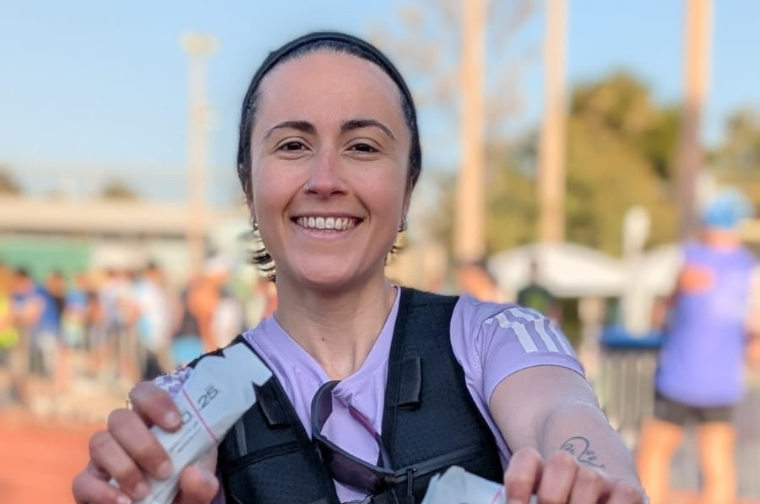
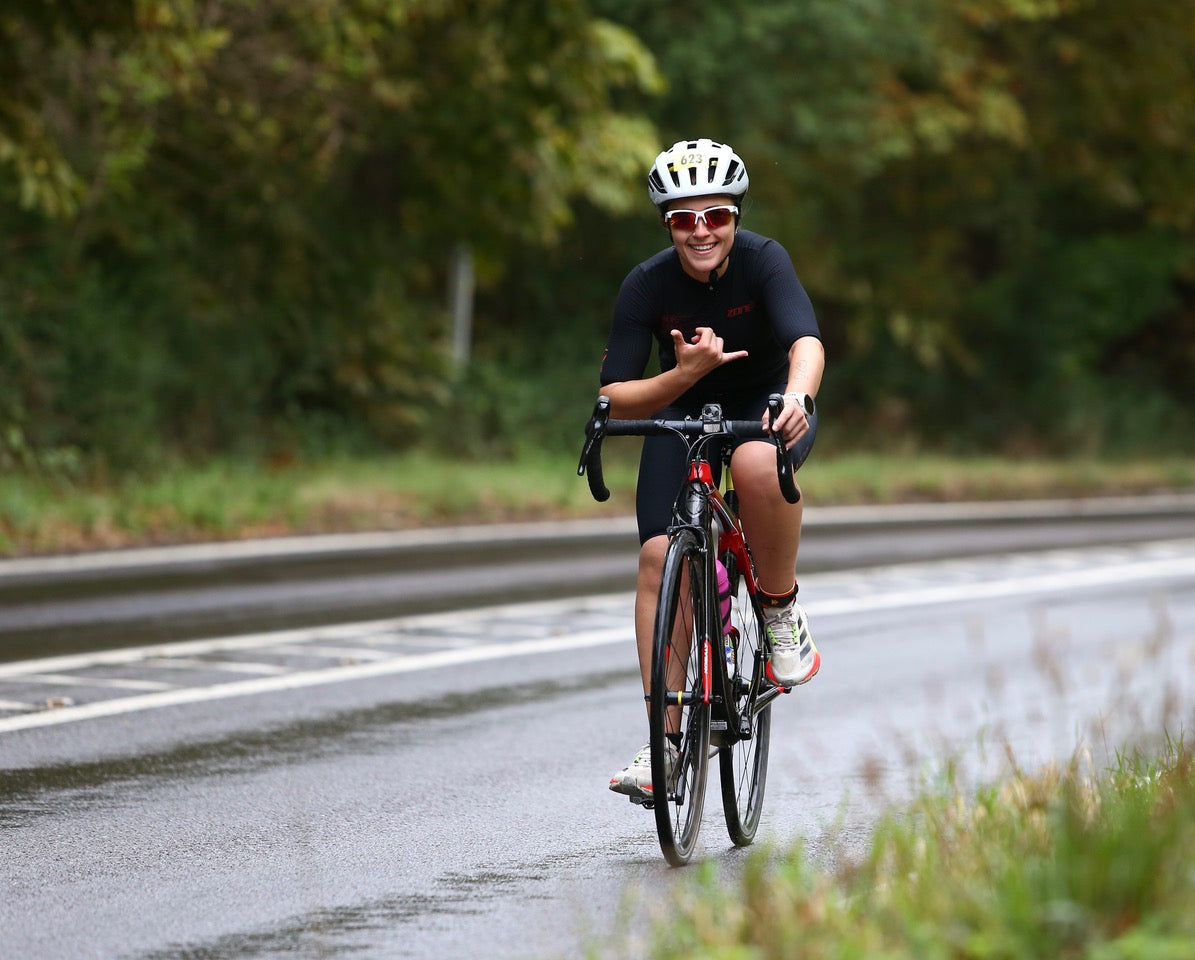
After experiencing how much heat could affect my performance in Athens, I arrived at my first sprint-distance triathlon in Cambrils with a very different mindset.
It was June, temperatures were high, and this time I felt prepared. I had trained for swimming, cycling and running, but I had also started to appreciate that the environment itself is part of the challenge.
For Cambrils, I made heat exposure part of my preparation. I deliberately trained during the warmer hours of the day and incorporated sauna sessions, knowing that the conditions would be very different from training in London. Athens had shown me how much heat can take away from performance; Cambrils showed me what being better prepared could change.
That experience made me curious about something beyond my own race:
Can we actually train the body to perform better in the heat?
The Body Learns
Heat adaptation is a remarkable example of how the body responds to repeated stress.
When we are repeatedly exposed to heat, the body gradually becomes better at dealing with it. Heart rate and core temperature can be lower during exercise, while sweating becomes more effective. These changes help reduce the physiological cost of exercising in hot conditions (Périard et al., 2015; Kelly et al., 2023).
But adaptation is not simply about spending time somewhere hot. The body needs a sufficient thermal stimulus to trigger these responses. In simple terms, you need to get genuinely hot.
That makes heat interesting as a training stimulus. Like training load, recovery or nutrition, it can be deliberately introduced and planned around the athlete's programme.
For someone training in London, where many sessions take place in relatively cool conditions, this matters. You can become very fit without necessarily becoming heat-adapted.
Fitness and heat adaptation are not the same thing. You can be ready to race, but not necessarily ready to race in the heat.
And the Body Remembers
One of the most fascinating ideas in heat adaptation is that the body does not simply adapt and then forget.
After heat exposure stops, adaptations gradually decline. But previous exposure can allow the body to reacclimatise much faster when heat stress returns. This retained adaptive capacity is sometimes referred to as thermal memory (Daanen et al., 2018).
But how long does this memory last, and how much previous exposure is enough?
For athletes, this raises an interesting possibility. Heat preparation does not necessarily have to mean living in a hot environment all year. Instead, targeted periods of heat exposure could be incorporated into training before competition, with previous exposure potentially helping the body adapt again more quickly.
But there is still a lot we do not know.
Can Women Adapt to Heat?
Yes, we can.
And as a female athlete, this is where I find the science particularly interesting.
The evidence is increasingly clear. A 2023 systematic review and meta-analysis specifically examining females found that heat adaptation can reduce core and skin temperature and heart rate, while increase sweating and improving several measures of exercise performance in the heat (Kelly et al., 2023).
So the question is no longer whether women can adapt. The more interesting question is:
How can we optimise that adaptation?
This is important because much of the historical research on heat adaptation has been conducted in men. An audit published in 2024 found that females represented only around 13% of participants across the heat-adaptation literature it examined, with most studies using male-only cohorts (Kelly et al., 2024).
And female physiology introduces additional questions.
Hormonal fluctuations can influence thermoregulation. Menstrual-cycle phase may affect responses to heat. And later in life, perimenopause and menopause introduce another major change in the hormonal environment.
Yet we still have limited evidence on how these factors should influence heat-acclimation strategies. We are beginning to see studies designed specifically around female athletes, which is an important step towards understanding how heat adaptation can be applied in real-world female sport.
For example, Fenemor and colleagues, including Julia Casadio, demonstrated that a practical heat-acclimation protocol integrated into the training of elite female rugby players produced meaningful adaptations, with some benefits persisting after the intervention ended (Fenemor et al., 2023).
And research continues to challenge the idea that we can simply take protocols developed in men and apply them to women. A recent study by Giersch and colleagues found that men and women both successfully adapted to a 10-day heat-acclimation protocol but appeared to do so through different physiological mechanisms.
All of this leads to a more interesting question: how can we optimise heat adaptation for each woman?
From Cambrils to the Bigger Question
Cambrils was my first triathlon. But it also changed the way I think about heat.
I used to think of heat mainly as something you had to tolerate on race day. Now I see it differently.
Heat is a physiological stimulus. The body can learn to handle it. And it may even remember some of what it has learned.
As athletes, we are becoming increasingly sophisticated about how we train. We monitor power, pace, heart rate, recovery and nutrition. I think temperature deserves the same attention.
This is also where practical cooling strategies become interesting. Tools such as CoreCtrl are designed to help athletes manage thermal strain before and during endurance exercise, adding another layer to how we can prepare for heat.
And as a female athlete, I find the unanswered questions particularly exciting.
We know that women can adapt to heat. What we still need to understand is how that adaptation changes with the individual, with training status, hormonal environment, age, life stage and previous exposure.
For me, that is where the story becomes bigger than one race.
Cambrils taught me that being fit is not necessarily the same as being prepared for the environment.
The next step is not only smarter, more individualised heat preparation. It is also more research that reflects women's physiology across the lifespan.
Because the body can learn. The body can adapt. And maybe, in some ways, the body remembers.
References
Périard J.D., Racinais S., Sawka M.N. (2015). Adaptations and mechanisms of human heat acclimation: Applications for competitive athletes and sports. Scandinavian Journal of Medicine & Science in Sports, 25(S1), 20–38.
Kelly M.K. et al. (2023). Heat Adaptation for Females: A Systematic Review and Meta-Analysis of Physiological Adaptations and Exercise Performance in the Heat. Sports Medicine, 53, 1395–1421.
Daanen H.A.M., Racinais S., Périard J.D. (2018). Heat acclimation decay and re-induction: a systematic review and meta-analysis. Sports Medicine, 48, 409–430.
Kelly, M. K., Smith, E. S., Brown, H. A., Jardine, W. T., Convit, L., Bowe, S. J., Condo, D., Guy, J. H., Burke, L. M., Périard, J. D., Snipe, R. M. J., Snow, R. J., & Carr, A. J. (2024). Auditing the Representation of Females Versus Males in Heat Adaptation Research. International Journal of Sport Nutrition and Exercise Metabolism, 34(4), 231–240
Fenemor S.P. et al. (2023). Heating Up to Keep Cool: Benefits and Persistence of a Practical Heat Acclimation Protocol in Elite Female Olympic Team-Sport Athletes. International Journal of Sports Physiology and Performance, 18(3), 276–283.
Giersch G.E.W. et al. (2025). Distinct physiological responses to heat acclimation in males and females lead to similar thermal adaptations in both sexes. Journal of Applied Physiology, 139(3), 863–872.