

How should you fuel for training and racing in the heat?
Heat doesn't just make you uncomfortable.
It changes the race.
Quick answer: Heat changes the race, so it should change your strategy.
When conditions become hotter, most athletes need to think about four things:
- More carbohydrates
- More electrolytes
- Earlier fuelling
- More preparation
The exact strategy depends on the event, temperature, sweat rate, intensity and your own experience. But the principle is simple. Don't treat hot weather running nutrition, summer cycling nutrition or heat training for triathlon as the same problem you have in cool conditions. The race has changed. Your strategy should change too.
Alistair's Perspective
"One of the biggest mistakes athletes make, including me, is thinking heat simply makes them feel worse. It doesn't. It fundamentally changes the physiology of the event. Instead of oxygen delivery or fuel availability, heat itself can become the limiting factor. You're no longer racing the same race, so you shouldn't use the same nutrition strategy."
— Alistair Brownlee, two-time Olympic triathlon champion & truefuels co-founder

Why
The answer starts with heat production.
The human body is remarkably inefficient. Only around 20 to 25 percent of the energy you produce during exercise becomes movement. The remaining 75 to 80 percent becomes heat. That is why endurance performance is a heat management problem as much as it is a fitness problem. Think of your body as an engine.
The objective isn't simply to produce power. It's also to stop the engine overheating. In cool conditions, your body does this remarkably well. Blood is redirected towards the skin, sweat evaporates, and heat escapes into the environment. As temperatures rise, however, this becomes increasingly difficult. Your body now has two competing priorities:
- Deliver oxygen and fuel to working muscles.
- Dissipate heat to keep core temperature under control.
The result is predictable. Heart rate rises. Sweat rate increases. Carbohydrate utilisation increases. Electrolyte losses increase. The same pace suddenly feels much harder. Heat is not simply uncomfortable. It becomes part of the event.
How does heat affect athletic performance?
Heat increases the physiological cost of exercise. That means the same pace or power output now places greater strain on the body. In practical terms, hot conditions can lead to:
- Higher heart rate at the same pace
- Faster glycogen depletion
- Greater sweat losses
- Higher sodium losses
- More gastrointestinal stress
- Increased perceived effort
- Earlier fatigue
This is why a pace that feels controlled in cool conditions can become unsustainable in hot weather. Your fitness has not disappeared. The event has changed.

So what
The physiology is interesting. What matters is how it changes your strategy.
Understanding why heat slows you down doesn't make you faster. Changing your behaviour does. When the temperature rises, your body generally needs:
- More carbohydrate
- More electrolytes
- Earlier fuelling
- More preparation
Many athletes reduce heat to a hydration problem. It's much bigger than that. Heat changes the demands of the event, so it should change your nutrition strategy. The good news is that the strategy can remain simple.
Think in truefuels gels, not grams.
| Conditions | Think in | Carbohydrate |
|---|---|---|
| Cool conditions | 1 gel per hour | 40 g |
| Warm conditions | 2 gels per hour | 80 g |
| Hot conditions | 2 gels per hour plus additional electrolytes | 80 g |
| Extreme heat or very high intensity | Up to 3 gels per hour if practised | 120 g |
You don't need to remember 67 g or 93 g of carbohydrate. You simply decide whether today's session requires one, two or three gels.
Should you take more gels in the heat?
Often, yes. Heat increases the physiological cost of exercise and can increase carbohydrate use. For many athletes, this means carbohydrate intake should move up, not down. But there is an important caveat. Heat can also increase the risk of gastrointestinal distress. So don't suddenly take more gels on race day because the forecast is hot.
Practise the strategy first.
If you normally take 1 gel per hour in cool conditions, build towards 2 gels per hour in training before relying on that strategy in a hot race. The goal is not to eat the most carbohydrate. The goal is to absorb the most carbohydrate you can tolerate consistently.
"One thing I learnt over twenty years of racing is that simple plans survive pressure. The best nutrition strategy isn't the most complicated one. It's the one you can still follow when you're three hours into a race and no longer thinking clearly."
Alistair Brownlee

A common mistake
"I'll just drink more water."
I hear this all the time. The forecast says it's going to be hot. Most people solve the problem by carrying another bottle. Unfortunately, that's only solving one part of the problem. Heat doesn't just increase fluid loss. It also increases:
- Carbohydrate utilisation
- Electrolyte losses
- Cardiovascular strain
Water replaces fluid. It does not replace the extra carbohydrate your muscles are using. It does not replace the sodium you're losing through sweat. And it does not prepare your body for exercising in the heat. Many athletes think they have a hydration problem. In reality, they have a heat management problem. Water solves hydration. It doesn't solve heat.
"People often ask me how much more I drank during hot races. Of course, I did drink much more, up to nearly 3 L/hr in very hot races. But the better question is how much more I prepared. Heat rewards preparation and punishes complacency."
Alistair Brownlee

Now what
Build your heat strategy before race day.
Your muscles adapt to training. Your cardiovascular system adapts to training. Your body adapts to heat too. The objective is not to survive race day. The objective is to arrive at race day already adapted to the conditions and already confident in your nutrition strategy.
Build your heat strategy around five habits:
- Train in the heat where possible.
- Practise your race nutrition in training.
- Increase carbohydrate if you have trained your gut to tolerate it.
- Increase electrolyte intake as conditions become hotter.
- Start your CoreCtrl protocol eight days before the event.
Never experiment on race day. Heat preparation is a training block, not a last-minute decision.

Heat adaptation
How to avoid overheating during a race
There is rarely one solution. Avoiding overheating during a race is about keeping the whole system under control. That means:
- Arriving heat adapted
- Starting fuelling early
- Replacing electrolytes
- Drinking appropriately
- Pacing for the conditions
- Using cooling tactics where available
- Practising the strategy before race day
Many athletes fail in the heat because they wait until the problem appears. By then, it is often too late. The best cooling strategy for runners, cyclists and triathletes is the one that starts before the race begins.
Does pre-cooling actually work?
Pre-cooling can help some athletes reduce thermal strain before exercise, especially in hot conditions. Examples include:
- Cold drinks or ice slurries
- Cooling vests
- Shade before the start
- Cold towels
- Ice in aid stations
But pre-cooling is not a replacement for preparation. It does not replace heat adaptation. It does not replace carbohydrate. It does not replace electrolytes. It is one tool in the system. The goal is not to find one magic cooling strategy. The goal is to stack small advantages that help you manage heat for longer.
What is heat training?
Heat adaptation is the process by which your body becomes better at exercising in hot conditions. Heat training is the practice that creates that adaptation. It does not have to mean training in a hot country. It can be any controlled method that raises core body temperature enough to create a heat stimulus. There are two main approaches.
Active heat training means exercising in hot conditions or in extra clothing so that training itself raises core temperature.
Passive heat training means using heat exposure after or around training, such as saunas, hot baths, heated rooms or heat tents.
I used different approaches over my career, including saunas, heated bathrooms, plastic tents and training in hot environments. The method mattered less than the outcome. The goal was to elevate core temperature during repeated sessions and give the body a reason to adapt. In sports science, this is often discussed as raising core temperature above approximately 38.5°C, although the exact threshold and response will vary between athletes. Over repeated sessions where core temperature is elevated, the body adapts to that stimulus. These adaptations include:
- Increased plasma volume
- Earlier onset of sweating
- Higher sweat rate
- Reduced cardiovascular strain
- Better ability to dissipate heat
- Lower heart rate at the same workload
Most athletes begin developing meaningful adaptations within approximately one week, with further improvements over the following days. Just like fitness, these adaptations require practice. Heat adaptation is earned, not bought.
How long does heat adaptation take?
Meaningful changes can begin within approximately 7 to 10 days, although responses vary between individuals. Some athletes adapt quickly. Others need longer. The important point is that heat adaptation is not something you can create on race morning. For important hot races, start preparing early and maintain exposure where possible.

Heat nutrition
What should you eat when training in hot weather?
As a simple rule: Fuel earlier than you think. Don't wait until you feel tired. Don't wait until you feel thirsty. By the time those signals arrive, performance has already begun to decline. For hot weather running nutrition, summer cycling nutrition or heat training for triathlon, start with the same truefuels system:
- 1 gel per hour for easier or shorter sessions
- 2 gels per hour for longer or harder sessions
- 3 gels per hour only if practised
- Additional electrolytes as conditions become hotter.
A proactive strategy is almost always better than a reactive one.
Running in 30 degrees: nutrition tips
Running in 30 degrees changes the session. The same pace costs more. Your sweat rate rises. Your gut is under more stress. Your nutrition plan should reflect that. For running in hot conditions:
- Start fuelling early.
- Take gels with water.
- Increase electrolytes.
- Use 40/1.0 if you need more salt.
- Practise the exact plan before race day.
- Reduce intensity if conditions demand it.
The aim is not to prove toughness. The aim is to keep the system working.

Electrolytes for hot weather
How many electrolytes do you need in the heat?
Electrolyte needs vary enormously between athletes. Some people are light sweaters. Some are heavy sweaters. Some lose far more sodium in sweat than others. But the direction of travel is simple. As conditions become hotter, electrolyte needs usually increase.
As a practical guide:
| Conditions | Electrolyte strategy |
|---|---|
| Cool conditions | Normal hydration or 1 sachet per hour if sweating heavily |
| Warm conditions | 1 sachet per hour |
| Hot conditions | 1 to 2 sachets per hour depending on sweat rate |
| Extreme heat or heavy sweater | 2 sachets per hour may be appropriate if practised |
Water replaces fluid. Electrolytes replace what sweat takes away.

Why we built CoreCtrl
Preparation, not rescue.
Most heat strategies focus on race day. We wanted to focus on preparation, not race day. After years of racing, I realised there wasn't a simple product that fitted into a structured heat preparation strategy. When I started reading the emerging research on taurine and thermoregulation, I realised there was an opportunity to create an entirely new category of sports nutrition. CoreCtrl wasn't designed to be a miracle solution. It was designed to become one component of a much bigger strategy. It should be used alongside:
- Heat adaptation training
- Appropriate carbohydrate intake
- Electrolyte replacement
- Sensible pacing
Preparation, not rescue.
"There is rarely one thing that wins a race in the heat. Usually it's a collection of small decisions made well. CoreCtrl was designed to be one of those decisions."
Alistair Brownlee
Which products should you use?
| Goal | Recommended product |
|---|---|
| Heat preparation | CoreCtrl |
| Daily hydration and electrolyte replacement | Electrolytes |
| Fuel during exercise | Performance Gel 40/0.25 or 40/1.0 |
| Hot races or heavy sweaters | Performance Gel 40/1.0 |
| Complete strategy | Race Ready System |
The carbohydrate strategy stays simple.
The sodium strategy changes with the conditions.
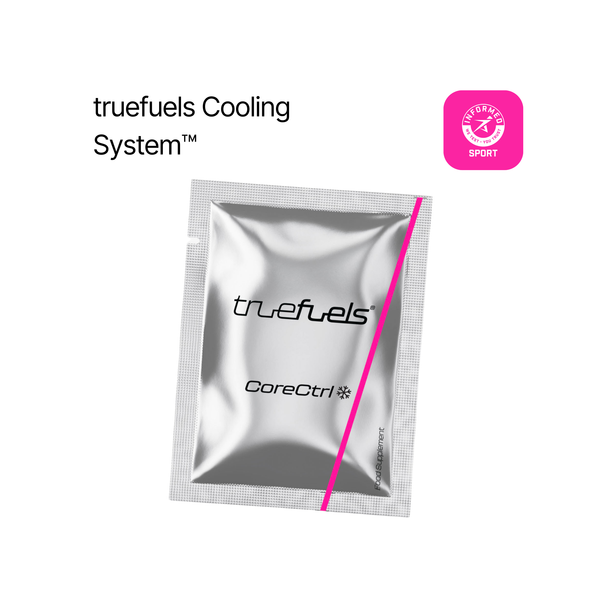
CoreCtrl
Designed to support heat preparation before key training blocks and hot races. Start your protocol eight days before the event.
Shop CoreCtrl →
Electrolytes
Daily electrolyte replacement to replace what sweat takes away and support hydration. Increase intake as conditions become hotter.
Shop Electrolytes →
Performance Gel 40/1.0
40 g carbohydrate with 1 g salt. Designed for athletes training and racing in warmer conditions or those who need higher sodium intake.
Shop High Salt Gels →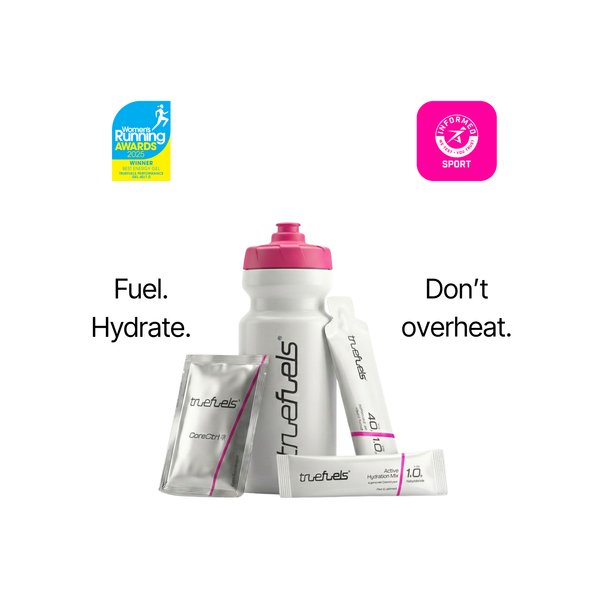
Race Ready System
The complete fuelling system for athletes preparing for prolonged events in hot environments. Includes gels, electrolytes and CoreCtrl.
Shop Race Ready System →One rule to remember
Heat changes the race.
So it should change your strategy.
Frequently Asked Questions
Heat increases the physiological cost of exercise. Heart rate rises, sweat rate increases, carbohydrate use can increase and electrolyte losses become greater. The same pace or power output therefore becomes harder to sustain. Heat does not just make exercise feel worse. It changes the demands of the event.
Electrolyte needs depend on sweat rate, temperature, intensity and individual sodium loss. As a practical guide, use 1 sachet per hour in warm conditions and 1 to 2 sachets per hour in hot conditions depending on sweat rate. Heavy sweaters may need the higher end, but the strategy should be practised in training.
Yes. Drink more water. But don't stop there. Water replaces fluid. It does not replace carbohydrate. It does not replace electrolytes. And it does not prepare your body for heat. Hot weather needs a broader heat management strategy, not just a bigger bottle.
Generally, yes. Heat increases the physiological cost of exercise and can increase carbohydrate utilisation. If you have practised higher carbohydrate intake in training, increasing intake during hot conditions is often beneficial. But hot conditions can also increase gastrointestinal distress, so do not try a higher intake for the first time on race day.
Often, yes. If a hot session is longer or more intense, moving from 1 truefuels gel per hour to 2 gels per hour may be appropriate. For extreme heat or very high intensity racing, some athletes may build towards 3 gels per hour, but only if practised. Think in 40 g steps and build gradually.
Prepare by combining heat adaptation sessions, adequate carbohydrate intake, appropriate electrolyte replacement and practising your exact race day nutrition strategy in training. If using CoreCtrl, start your protocol eight days before the event. Race day should never be the first time you test your plan.
Heat training is the practice that creates heat adaptation. It can be active, such as exercising in hot conditions or wearing extra clothing, or passive, such as using saunas, hot baths, heated rooms or heat tents. The goal is to raise core temperature over repeated sessions so the body adapts to exercising in the heat.
Active heat training uses exercise to raise core temperature. Passive heat training uses heat exposure around training, such as saunas, hot baths or heat tents. Both can be useful, but the principle is the same: repeated exposure creates adaptation.
Meaningful heat adaptations can begin within approximately 7 to 10 days, although responses vary between athletes. Adaptations can include increased plasma volume, earlier sweating, higher sweat rate and reduced cardiovascular strain. Like fitness, heat adaptation needs practice.
Pre-cooling can help reduce thermal strain before exercise in some hot conditions. Cold drinks, ice slurries, cooling vests, shade and cold towels can all be useful. But pre-cooling is not a replacement for heat adaptation, fuelling, electrolytes or pacing. It is one tool in the system.
For hot weather training, start fuelling earlier than you think. Use 1 truefuels gel per hour for easier or shorter sessions, 2 gels per hour for longer or harder sessions and 3 gels per hour only if practised. Increase electrolytes as conditions become hotter and take gels with water.
The best cooling strategy is a system, not one trick. Prepare with heat adaptation, start fuelling early, replace electrolytes, pace appropriately, use shade or cooling where available and practise the strategy in training. Waiting until you already feel overheated is usually too late.
Continue your learning
Understanding heat is only one part of endurance performance. Continue exploring the science:

The Physics of Heat
Why only around 20 to 25 percent of your energy becomes movement and why the rest becomes heat.
Read The Physics of Heat
Heat Acclimation
How the body adapts to heat, why plasma volume expands, sweat rate increases, and heart rate falls.
Read Heat Acclimation
How Many Carbs Per Hour Do You Actually Need?
Learn how carbohydrate absorption, gut training and fuelling strategy determine endurance performance.
Read How Many Carbs Per Hour
Electrolytes Explained
Why water alone isn't enough and how sodium influences performance.
Read Electrolytes ExplainedBuild your personal strategy
Every athlete is different. Your heat strategy should depend on:
- Event duration
- Temperature
- Sweat rate
- Intensity
- Experience
- Gut tolerance
Use the truefuels Fuel Calculator to calculate:
- Recommended carbohydrate intake
- Electrolyte requirements
- Product recommendations
- Timing strategy
"The hardest races I've done weren't necessarily the hottest. They were the races where I underestimated the heat and got it very wrong. Heat rewards preparation and punishes complacency."
Alistair Brownlee