Sachets vs Hydration Tablets for Endurance
A hydration mistake rarely announces itself at the start line. It shows up later: a rising heart rate at an easy pace, a stomach that stops cooperating, cramp-prone muscles, or the sudden realisation that plain water is no longer touching the problem. When comparing sachets vs hydration tablets, the useful question is not which format is more convenient. It is which one lets you deliver the fluid and electrolytes your session actually demands.
For endurance athletes, hydration is a performance input. The right format should make it easier to execute a plan for your duration, sweat rate, temperature and access to water. It should not create another variable to manage when fatigue is high.
Sachets vs hydration tablets: the real difference
Both formats are designed to turn water into an electrolyte drink. Both can be useful. The differences sit in dosage precision, formulation capacity, mixing behaviour and race-day control.
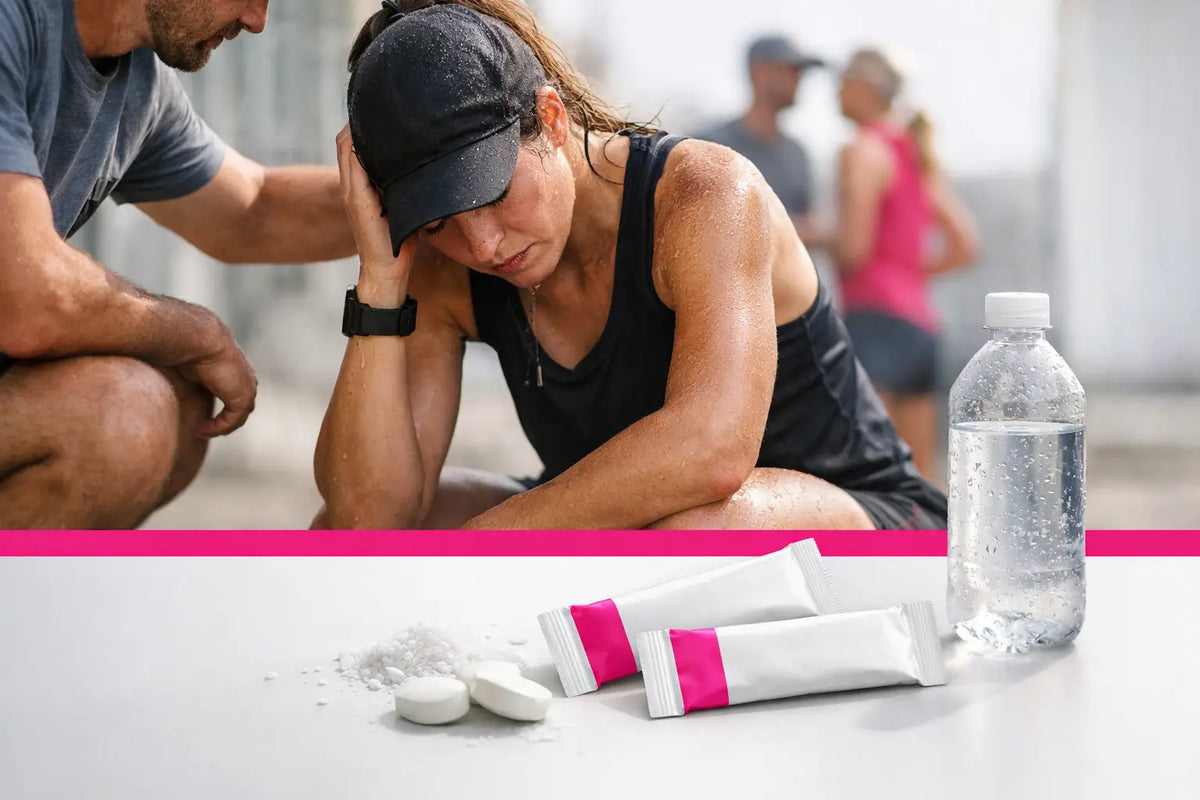
A sachet is a pre-measured powder serving. Depending on its formulation, it can deliver meaningful quantities of sodium, potassium, magnesium and carbohydrate in one bottle. Powder gives product formulators more room to include multiple ingredients at useful doses, without relying on the tablet to stay compact or dissolve through an effervescent system.
A hydration tablet is usually a compressed, soluble tablet dropped into water. It is compact, individually portioned and simple to carry. Most tablets use fizzing agents to dissolve, which can make the drink pleasant and accessible for lower-intensity sessions. However, the format can limit how much electrolyte or carbohydrate is practical to include in a single serving. That does not make tablets ineffective. It means athletes should read the label rather than assume one tablet matches the demands of a long, hot event.
The deciding factor is the amount of sodium and energy delivered per bottle, not whether the product arrives as powder or a tablet.
Sodium is the number that deserves attention
Sodium is the electrolyte most commonly lost in meaningful quantities through sweat. It helps retain consumed fluid and supports normal nerve and muscle function. During a long race, replacing some of that loss can help you maintain a practical drinking strategy, particularly when conditions are warm or your sweat rate is high.
Sweat sodium losses vary substantially. Two athletes can complete the same run in the same weather and need different sodium intakes because they sweat at different rates and lose different sodium concentrations. There is no single serving size that is right for every athlete.
This is where sachets often offer an advantage for serious endurance use. A powder-based product can be designed around a defined sodium target per serving and paired with a recommended water volume. That allows you to calculate what is going into each bottle, then scale intake across the day. If you know you need a higher-sodium approach, you can choose it deliberately instead of adding several low-dose tablets and hoping the maths works out.
Tablets can still fit the plan. They may suit shorter runs, recovery rides, travel, office use or cool-weather training where fluid loss is modest. They can also be useful when your primary need is to make water more palatable. But if the label delivers a low sodium amount, calling it a race hydration strategy does not change the physiology.
Mixing strength changes how the drink performs
Every electrolyte product has an intended dilution. Too little water can leave a drink overly concentrated, increasing the risk of a sickly taste or gastrointestinal discomfort. Too much water can dilute the sodium and carbohydrate delivery below what your plan requires.
Sachets tend to be built for a specific bottle volume. That is useful when you can prepare bottles before a long ride, set up a transition bag or carry a soft flask at a race. You know the concentration before you begin. For athletes using gels alongside their drink, this also helps separate fuel decisions from hydration decisions: gels can cover carbohydrate targets, while the bottle covers fluid and electrolytes.
Tablets are often forgiving for casual use because they are made to dissolve in a common bottle size. The trade-off is that athletes may be tempted to use them in whatever bottle is available, without checking whether the resulting concentration is appropriate. A tablet in a 250 ml flask and the same tablet in a 750 ml bottle are not equivalent hydration strategies.
Whichever format you choose, follow the stated mixing guidance first. Test any adjustment in training, not on the morning of an event.
Portability is useful only if you can execute it
Tablets have a clear practical advantage when space is tight. A tube is neat, durable and easy to put in a running belt, jersey pocket or hand luggage. They also avoid loose powder if you are mixing on the move.
Sachets are portable in a different way. Each serving is already separated, lightweight and easy to count. Put the exact number needed for a long session into a pocket or race bag and there is little room for uncertainty. They are particularly effective when aid stations provide plain water: open the sachet, add it to the bottle or flask, shake thoroughly and continue.
There are trade-offs. Powder can be harder to pour in strong wind or when hands are wet. Tablets need time to dissolve fully, and the fizz may be inconvenient if you are filling a bottle quickly. Neither issue is decisive if you rehearse your setup. The best format is the one you can mix, carry and consume consistently at pace.
Choose by session, not by marketing claim
A useful hydration plan changes with duration and conditions. A short easy run in cool weather may need little more than water, particularly if you start well hydrated and can drink afterwards. A two-hour ride, a long brick session or a summer marathon build-up is different. Fluid loss, sodium loss and the consequences of getting behind all increase.
Use this simple framework when deciding between sachets and tablets:
- For long sessions and races, prioritise a product with a clearly stated sodium dose and enough formulation capacity to support your planned intake.
- For hot conditions, high sweat rates or visible salt residue on kit, assess sodium delivery per bottle rather than simply drinking more water.
- For shorter or lower-intensity training, tablets may be a convenient way to improve the taste of water and maintain a regular drinking habit.
- For race days with gels or other carbohydrate sources, make sure your drink complements the fuel plan instead of accidentally doubling or underdelivering energy.
Do not confuse hydration with fuelling
A common endurance error is treating every drink as a full fuelling solution. Some electrolyte tablets contain minimal carbohydrate. That can be appropriate if you are using gels, chews or food for energy. Other drinks include more carbohydrate and can contribute towards an hourly fuelling target.
The key is to build one plan. Decide your carbohydrate target per hour, then account for what comes from drink and what comes from gels. Decide your approximate fluid requirement, then calculate the sodium delivered within that volume. This prevents the familiar situation where an athlete drinks plenty but takes in too little energy, or consumes concentrated fuel without enough fluid.
At truefuels, that is the principle behind treating fuel, hydration and regulation as one system rather than separate purchases. A product is only useful when it has a clear job in the wider protocol.
Test the format under pressure
Training is where you learn whether your chosen format works with your gut, your kit and your routine. Use it on the run after a hard bike effort. Mix it on a wet day. Carry it when your hands are cold. Practise filling bottles at the pace you expect to race.
Keep a brief record of conditions, fluid consumed, sodium per bottle, carbohydrate intake and how you felt late in the session. Over several long efforts, patterns become clearer. You may find that tablets are ideal for everyday hydration but a higher-dose sachet makes more sense for a hot race. Or you may find that the tablet format is the one you reliably use, which matters more than a theoretically perfect product left at home.
Choose sachets when precision, stronger formulation and repeatable race execution matter most. Choose hydration tablets when compact convenience fits the session and their label meets the plan. Then practise the decision until hydration becomes one less thing to think about when the race gets hard.