

How should you fuel a full Ironman?
Don’t see an Ironman as one race.
See it as a long series of nutrition decisions.
Quick answer: The bike is where you fuel the run.
The simplest Ironman nutrition mistake is waiting too long. You finish the swim. You settle onto the bike. You feel good. You delay fuelling. The bike is not just the bike. It is your best chance to fuel the run. Most athletes can take on more carbohydrate and fluid on the bike than they can on the run. There is less impact, less movement and usually more opportunity to drink, carry nutrition and follow a schedule. That makes the bike the main fuelling phase of an Ironman. For most Ironman athletes, the basic strategy is:
- Start fuelling early on the bike.
- Use the bike to take on the majority of your carbohydrate.
- Use gels or bottles to keep carbohydrate intake consistent.
- Use gels for carbohydrate and salt.
- Add Electrolytes when sweat losses are higher.
- Keep the run strategy simpler and more conservative.
- Practise everything before race day.
Every truefuels Performance Gel contains 40 g carbohydrate. That makes the plan simple:
- 2 gels per hour = 80 g carbohydrate
- 3 gels per hour = 120 g carbohydrate
Many age group athletes will race well around 80 g carbohydrate per hour. Well-trained athletes with good gut tolerance may build towards 100 g to 120 g per hour, especially on the bike. The best number is not the highest number. It is the highest number you can tolerate consistently.
Alistair's Perspective
"The biggest lesson from long course racing is that nutrition has to become automatic. You cannot be three, four or five hours into a race trying to work out what you should take next. The plan needs to be built before race day, practised in training and simple enough to execute when you are tired."
— Alistair Brownlee, two-time Olympic triathlon champion & truefuels co-founder


Why
The answer starts with duration.
An Ironman is long enough for small errors to accumulate. In a shorter race, you can sometimes get away with an imperfect fuelling strategy. In an Ironman, you usually cannot. You are asking the body to keep working for hours while managing:
- Carbohydrate depletion
- Fluid loss
- Sodium loss
- Rising fatigue
- Gut stress
- Heat stress
- Muscle damage
- Pacing errors
That is why Ironman nutrition is not just about eating more. It is about keeping fuel, fluid, salt, pacing and gut tolerance working together. Carbohydrates keep energy available. Salt and Electrolytes help replace what sweat takes away. Fluid supports blood volume and cooling. Heat preparation helps reduce physiological strain. Pacing gives the gut a chance to keep working. The better you control those variables, the more likely you are to express your fitness late in the race.
Why carbohydrate matters
During moderate to high intensity endurance exercise, carbohydrate is the fuel your body relies on most. Your body stores carbohydrate as glycogen in the muscles and liver. The problem is that there are limited stores. An Ironman is far longer than your internal carbohydrate stores can provide for. That means you need to supply your body with carbohydrate throughout the race. But the gut can only absorb what it has been trained to tolerate. This is why Ironman fuelling should be practised months before race day, not invented in transition. truefuels gels use a 1:1 maltodextrin to fructose ratio and provide 40 g carbohydrate per gel. That allows athletes to build simple hourly targets:
- 1 gel per hour = 40 g
- 2 gels per hour = 80 g
- 3 gels per hour = 120 g
Set the target in grams. Execute it in gels.
Why salt and electrolytes matter
An Ironman is also a long sweat loss problem. Sweat is not just water. It contains sodium and chloride, plus smaller amounts of potassium and magnesium. Sodium is usually the main electrolyte to focus on because it is lost in the greatest quantities through sweat. truefuels gels already contain salt, so for many athletes, especially in cooler conditions, gels can do two jobs during exercise:
- Provide carbohydrate
- Replace some of the salt lost through sweat.
But Ironman athletes may need more. Long duration, warm conditions, high sweat rates and visible salt marks all increase the need to think carefully about electrolytes. That is where truefuels Electrolytes fit. Gels provide fuel and some salt. Electrolytes give you extra control when sweat losses are higher.

So what
The science only matters if it changes what you do on race day.
A full Ironman needs a staged fuelling strategy. You do not fuel the swim, bike and run in the same way. The swim is about starting ready. The bike is about sustained good fuelling. The run is about executing when the gut is stressed. Race week prepares the system. Race morning tops it up. The bike does most of the work. The run is about small, consistent doses.
| Phase | Main job |
|---|---|
| Race week | Arrive fuelled, hydrated and prepared |
| Race morning | Start calm, topped up and familiar |
| Swim | Start with stores full |
| Bike | Main fuelling phase |
| T2 | Make run nutrition easy |
| Run | Keep taking small, consistent doses |
| Hot race | Increase heat preparation and electrolyte control |
The best Ironman nutrition plan is not the most complicated. It is the one you can still follow after six, eight or ten hours.
"I always thought about the bike as the place where you earn the right to run well. That does not just mean pacing. It means fuelling. If you underfuel the bike, the run can turn into a hell you created hours earlier."
Alistair Brownlee

A common mistake
“I’ll fuel when I feel like I need it.”
This is one of the biggest mistakes in Ironman nutrition. By the time you feel like you need fuel, you are already behind. Early in the race, you feel controlled. The swim is done. The bike starts smoothly. Your heart rate settles. You get carried away and convince yourself that nutrition can wait. But Ironman nutrition is not reactive. It is proactive. You fuel before you are empty. You drink before you are desperate. You replace salt before the deficit is obvious. You prepare for heat before the race starts. If you chase the problem all day, the race usually wins.
"The worst nutrition mistakes usually happen early, when everything still feels fine. You skip a gel because you feel good. You delay drinking because you are settled. I made this mistake racing Ironman Kona. I spent 40 minutes after a puncture fully focused on catching the leaders again, and neglected my nutrition. I got back to the front of the race, but my race was over. The race is long enough that every small decision compounds."
Alistair Brownlee
“I’ll rely on what I can get on the course.”
This is one of the easiest ways to lose control of your nutrition plan. The course may have fuel. But it might not be available when you need it. The gels might not be the ones you have practised with. They might be a flavour you do not like, or that does not agree with you. They might be hard to open. They might have been left out in the sun. You might pick up the wrong one. You might miss the aid station entirely. In an Ironman, that is too much to leave to chance. Have your carbohydrate and electrolytes with you. Use aid stations mainly for water. You cannot pick up the wrong flavour of water. The more you control your own fuelling, the less you have to solve during the race.
"When I raced, I preferred to rely on aid stations for water only. I wanted to know exactly what carbohydrate, salt and electrolytes I had with me. In a long race, the fewer decisions you have to make under pressure, the better."
Alistair Brownlee — Two-time Olympic Triathlon Champion
“I’ll make the plan as precise as possible.”
Precision is good. Complexity is not. A lot of athletes build race plans that look perfect on paper but are too complicated to execute when tired. Carbohydrate from one product. Electrolytes from another. Salt from capsules. Fluid from somewhere else. Caffeine on a separate schedule. Then the race starts. You are hot. You are tired. You miss a bottle. You drop a gel. Your stomach changes. Suddenly the perfect spreadsheet is useless. In the heat of the race, simplify everything you can. For many Ironman athletes, the simplest approach is to put as much of the plan as possible into bottles. Carbohydrate. Electrolytes. Salt. Then the job becomes simple: Sip consistently. That does not mean bottles solve everything. You still need to practise the concentration. You still need to know how much fluid you will drink. You still need backup gels. And you absolutely need to make sure you do not lose the bottle. Strap it in properly from the start. Treat it like essential race equipment. The best Ironman nutrition plan is not the most detailed one. It is the one you can actually execute.

Now what
Build your Ironman nutrition plan in phases.
Do not think about Ironman nutrition as one number. Think about it as a sequence. Race week. Race morning. Bike. T2. Run. Heat. Each phase has a job.

Race week nutrition
Arrive full, not overloaded.
The goal of race week is to start the race with full carbohydrate stores, stable hydration and a calm gut. That does not mean stuffing yourself with carbohydrate until you feel uncomfortable. Most athletes will get close to a fully loaded state by easing off training, maintaining a normal full diet and putting slightly more focus on carbohydrate in the final days. The aim is to arrive fuelled. Not bloated. Not stressed. Not trying to force down food you do not normally eat. The key window is usually the final 48 hours before the race. For many athletes, carbohydrate intake can increase in the final 48 hours, depending on body size, tolerance and experience. But the practical rule is simpler: Eat familiar foods. Reduce fibre if your gut is sensitive. Keep meals easy to digest. Put more emphasis on carbohydrate. Do not make race week a food challenge. For me, rice pudding became an ideal pre-race meal. It was low fibre, carbohydrate-rich, and easy to eat. It also tasted good, which matters more than people think when nerves are high. I could eat it very close to the swim start for an Ironman. Other athletes may need two to three hours before they can comfortably start racing. That is why pre-race nutrition has to be practised.
| When | Action | Product | Notes |
|---|---|---|---|
| 8 days before hot race | Start CoreCtrl | 1 sachet daily | Use as part of heat preparation if conditions are warm or hot |
| 48 hours before | Increase carbohydrate focus | Familiar foods | Rice, pasta, potatoes, bread, oats or rice pudding. Keep fibre and fat lower if needed |
| Evening before | Normal carbohydrate focused meal | Familiar food | Eat early. Sleep is more important than forcing extra food |
| Race morning | Pre-race breakfast | Familiar food | Timing depends on gut tolerance. Some need 2 to 3 hours. Others can eat closer |
| 30 min before swim | Final top up | 1 gel plus Electrolytes | Practise this before race day |
Race morning: Do not experiment.
Race morning should be boring. That is the point. Eat food you know. Drink what you have practised. Travel with the products you intend to use. Avoid anything new. A simple race morning structure:
- Breakfast based on your practised timing
- Sip fluid steadily
- Electrolytes in 500 ml water around 30 minutes before the swim
- 1 gel around 15 to 30 minutes before the swim if practised
- No new foods
- No new caffeine strategy
- No last-minute panic eating
Some athletes need two to three hours between breakfast and the start. Others can eat much closer. The only answer that matters is the one you have practised.


Race nutrition
The swim: You do not fuel the swim. You fuel before it.
The swim is not where you take nutrition. But it still matters. If you start underfuelled, the rest of the race begins with a deficit. Your job before the swim is to arrive:
- Glycogen-replete
- Hydrated
- Electrolyte balanced
- Calm
- Ready to fuel early on the bike
If you have to eat the last meal 3 hours before the start, you could sip on a 500 ml water bottle with one truefuels gel in it, just to keep topping up carbohydrate. But it is not essential. Just before the start of the swim, take one gel if practised. That gives you 40 g of carbohydrate to help fuel you through the 3.8 km swim and into the early bike.
The bike: The bike is the main fuelling phase.
This is where most of your Ironman nutrition happens. Your gut is usually more tolerant on the bike than on the run. There is less impact. Less movement. It is easier to drink. It is easier to carry products. It is easier to follow a schedule. That makes the bike your best opportunity to stay ahead. For many athletes, a strong starting point is 2 truefuels gels per hour, giving 80 g carbohydrate per hour. Well-trained athletes with good gut tolerance may build towards 3 gels per hour, giving 120 g carbohydrate per hour. But this must be practised. Do not attempt 120 g per hour on race day if you have not built it in training.
| Bike target | truefuels strategy | Carbohydrate |
|---|---|---|
| Conservative | 1 to 2 gels per hour | 40 to 80 g per hour |
| Strong age group strategy | 2 gels per hour | 80 g per hour |
| High carbohydrate trained | 2 to 3 gels per hour | 80 to 120 g per hour |
| Elite or very well trained | 3 gels per hour if practised | 120 g per hour |
The bike: Bike timing
A simple rule: Start within the first 20 minutes. Do not wait until you feel hungry. A practical bike schedule:
| Time | Action |
|---|---|
| First 20 minutes | Start fuelling |
| Every 20 to 30 minutes | Continue gels or bottle sips according to target |
| Every hour | Check fluid and electrolyte intake |
| Hot conditions | Use 40/1.0 and add Electrolytes as needed |
| Final 30 minutes | Keep fuelling, but avoid overloading the gut before the run |
The aim is to step off the bike ready to run.
Bottle strategy: Make the bike plan easy to execute.
The bike is the best place to simplify your fuelling. A concentrated bottle can make the plan much easier. Instead of thinking about separate gels, salt, electrolytes and timing, you can put a large part of the plan into one bottle and sip consistently. That bottle can contain:
- Carbohydrate from gels
- Salt from gels
- Extra Electrolytes if needed
- Water to dilute to the concentration you have practised
This approach works because it reduces decision-making. You know what is in the bottle. You know how long it should last. You know how much carbohydrate and salt you are getting. But it only works if you practise it. You need to know:
- The concentration your gut tolerates
- How much water you need alongside it
- How often you need to sip
- What backup gels you are carrying
- Where the bottle is secured
And one rule matters above all: Do not lose the bottle. Strap it in properly from the start. Check it is secure. Treat it like essential race equipment. Because it is.
T2 nutrition: T2 is where you make the run easier.
Think of T2 as a nutrition checkpoint. I found that decision-making is harder and gut tolerance is lower on the run. That means your run nutrition should be set up before the race starts. Use your T2 bag to make the plan obvious. Pack:
- 2 gels
- Squeezy bottle with gels for the whole run
- High salt gels if conditions are warm or hot
- Any personal race essentials
Your first run gel should be easy to access. I sometimes walked out of transition for a few metres while I took that first gel. Aim to take the first gel within the opening 15 minutes of the run if tolerated.
The run: The run is where the gut is most stressed.
Ironman run nutrition is different from bike nutrition. The gut is under more stress. There is more impact and movement. Fatigue is higher. Heat load may be higher. Your appetite will probably be lower. This is why the run strategy should be simple. Decant the gels you need for the run into one squeezy bottle that you can carry in a tri suit pocket. Ready to pick up in T2 and carry with you. Take smaller, consistent sips of the squeezy bottle. Aim for 5 to 10 g of carbohydrate per sip, ideally with water from aid stations. Do not chase lost calories with one big intake. For many athletes, the run target will be slightly lower than the bike.
| Run situation | Strategy |
|---|---|
| Feeling good | Sip from bottle every 10 to 15 minutes |
| Gut sensitive | Smaller sips and smaller doses more often |
| Hot conditions | Prioritise fluid, salt and cooling |
| Cramp risk rising | Use high salt gels and Electrolytes if practised |
| Final hour | Keep taking small amounts if tolerated |
A practical target for many athletes is 1 to 2 gels per hour on the run, depending on pace, tolerance and conditions. Ideally, take this from a squeezy bottle so you can sip in 5 to 10 g doses. If you can maintain more, and you have practised it, that may be useful. But do not force the run gut beyond what it can handle.
Heat and Ironman nutrition: Heat changes the race.
A hot Ironman is not the same race as a cool Ironman. Heat can increase:
- Sweat rate
- Sodium loss
- Cardiovascular strain
- Carbohydrate use
- Gut stress
- Perceived effort
That means your strategy should change too. For hot races:
- Start CoreCtrl 8 days before the event if using it.
- Prioritise heat adaptation in training.
- Use high salt gels more often.
- Increase Electrolytes according to sweat rate.
- Practise your hot weather plan.
- Pace more conservatively early.
Heat does not reward bravery. It rewards preparation.
70.3 vs full Ironman nutrition: The principles are the same. The consequences are different.
A 70.3 is long enough for nutrition to matter. A full Ironman is long enough for nutrition to define the race. In a 70.3, you may get away with small errors. In a full Ironman, small errors usually compound.
| Race | Nutrition priority |
|---|---|
| 70.3 | Fuel early, especially on the bike, and protect the run |
| Full Ironman | Build a full-day system for carbohydrate, salt, fluid and heat |
| Hot 70.3 | Higher electrolyte focus |
| Hot full Ironman | Full heat preparation strategy required |
The longer the race, the less you can rely on instinct. You need a plan.

Calculate your Ironman fuel plan.
Build the plan before race day.
Every athlete is different. Your Ironman nutrition plan should depend on:
- Expected finish time
- Bike duration
- Run duration
- Temperature
- Sweat rate
- Gut tolerance
- Experience
- Whether you are racing a 70.3 or full Ironman
Use the truefuels Fuelling Plan Calculator to calculate:
- Recommended carbohydrate intake
- Number of gels required
- Salt strategy
- Electrolyte requirements
- Timing schedule
- Product recommendations
Why we built the Race Ready System
Most Ironman athletes do not need more complexity. They need a complete system. That is why the Race Ready System brings together the key tools for long course racing:
- Performance Gels for carbohydrate and salt
- Electrolytes for extra control when sweat losses are higher
- CoreCtrl for heat preparation
- A bottle to make the plan easier to execute
The point is not to add more products. It is to make the plan easier to follow. For a race as long as an Ironman, simplicity is not a nice-to-have. In an Ironman, simplicity is performance.
"The longer the race, the more important simplicity becomes. You do not want a plan that only works on a spreadsheet. You want a plan that still works when you are tired, hot, behind schedule or no longer thinking clearly."
Alistair Brownlee — Two-time Olympic Triathlon Champion
Which products should you use?
| Goal | Recommended product |
|---|---|
| Complete Ironman system | Race Ready System |
| Main race day fuel | Performance Gel 40/1.0 or 40/0.25 |
| Hot races or heavy sweating | Performance Gel 40/1.0 plus Electrolytes |
| Daily hydration and electrolyte control | Electrolytes |
| Heat preparation | CoreCtrl |
| Gut training and race practice | Training Bundle |
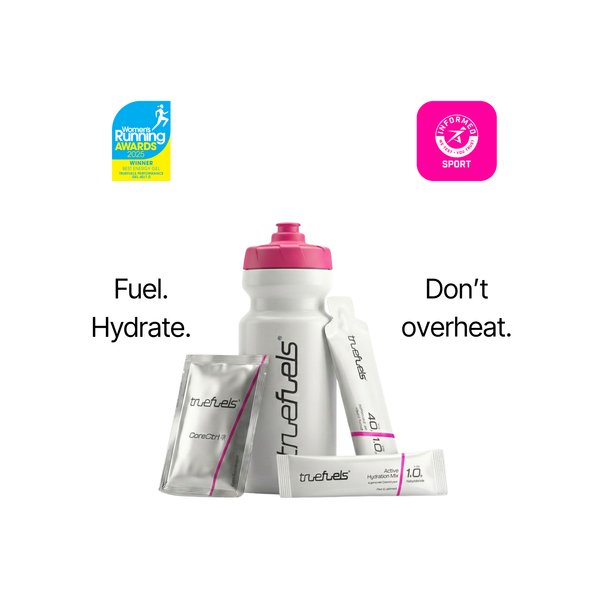
Race Ready System
40 gels, 40 electrolyte servings, 8 CoreCtrl sachets and a bottle. The complete truefuels system for long-course racing. Best for athletes preparing for a full Ironman, hot race or demanding endurance event.
Shop Race Ready System →
Performance Gel 40/1.0
40 g carbohydrate with 1 g salt. Primary race day gel for warm conditions, hot races, heavy sweaters or athletes who need higher salt across a long event.
Shop Performance Gel 40/1.0 →
Performance Gel 40/0.25
40 g carbohydrate with 0.25 g salt. Best for cooler conditions, lower sweat losses, shorter sessions, or athletes who want carbohydrate with a lower salt load. Use on its own or stack with 40/1.0 to control carbohydrate and salt across the race.
Shop Performance Gel 40/0.25 →
Electrolytes
400 mg sodium, 150 mg potassium and 25 mg magnesium per sachet. Use before, during or after training and racing when sweat losses are higher or when you want electrolytes without more carbohydrate.
Shop Electrolytes →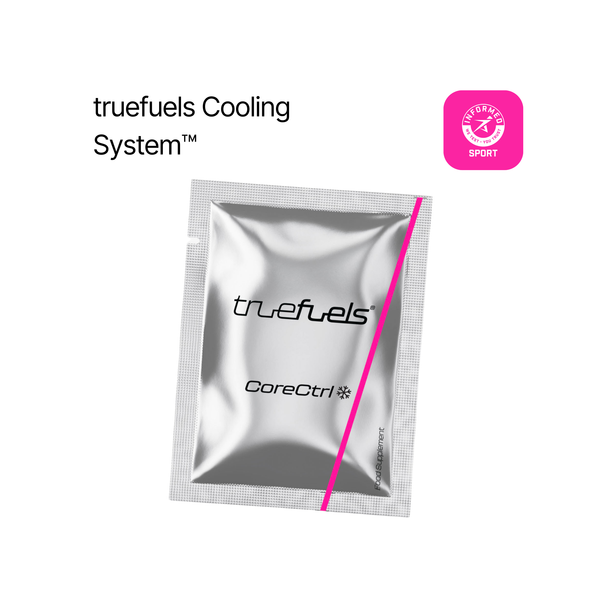
CoreCtrl
Designed to support heat preparation before key training blocks and hot races. Contains 4,000 mg L-Taurine per sachet. Best used alongside heat adaptation, electrolytes, carbohydrate and sensible pacing.
Shop CoreCtrl →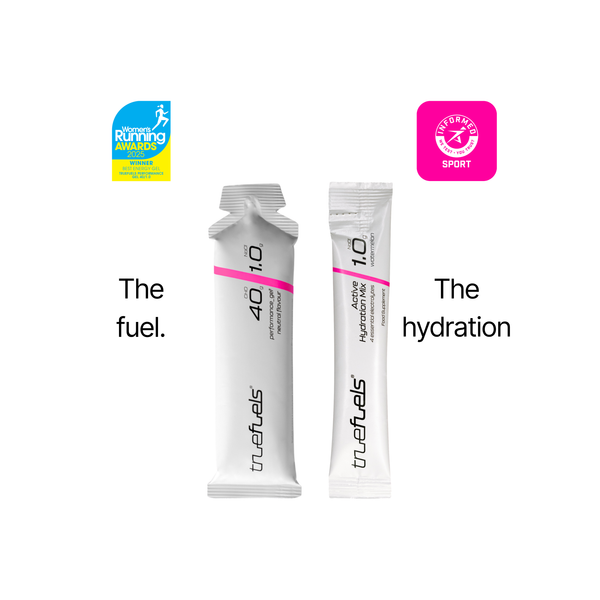
Training Bundle
20 gels plus 20 electrolyte sachets. A practical system for practising fuelling and hydration before race day.
Shop Training Bundle →One rule to remember
The bike fuels the run.
The simpler the plan, the more likely you are to follow it.
Training prepares the gut. Race day executes the plan.
Frequently Asked Questions
It depends on your expected race time, carbohydrate target and gut tolerance. As a simple guide, an athlete using 2 truefuels gels per hour for a 6-hour bike would use 12 gels on the bike alone. Add run gels and pre-race fuelling, and many full Ironman athletes need a large number of gels across race day. Use the truefuels Fuelling Plan Calculator to build your exact plan.
Most Ironman athletes rely on a mix of gels, drinks, electrolytes and water. The key is not variety. The key is consistency. truefuels gels provide carbohydrate and salt, while Electrolytes give extra control when sweat losses are higher. Food choices should be practised well before race day.
Practise your nutrition in training. Build carbohydrate intake gradually. Use the same products you plan to race with. Avoid new foods on race day. Start fuelling early and do not overload the gut late in the race. Many GI problems happen because athletes either take too much too late or try a strategy they have not practised.
The best Ironman run nutrition is simple and practised. Many athletes use 1 to 2 gels per hour on the run, depending on gut tolerance, pace and conditions. Hot races may require more electrolyte control. The goal is to keep small amounts going in consistently without overwhelming the gut.
Focus on familiar foods, a slightly higher carbohydrate emphasis in the final days, steady hydration and a calm gut. Avoid high fibre, high fat or unfamiliar meals close to race day. Most athletes do not need to stuff themselves. Easing off training while maintaining a full diet with more carbohydrate focus will often get them close to fully loaded.
Many athletes use the bike bottle to simplify the plan. A concentrated bottle can contain gels for carbohydrate, salt from the gels, extra electrolytes if needed and enough water to reach a concentration you have practised. You still need to drink water alongside it and carry backup nutrition in case the bottle is lost.
Eat something familiar, carbohydrate-rich, and easy to digest. Timing depends on the athlete. Some people need two to three hours before the start. Others can eat much closer. Rice pudding can work well for some athletes because it is low fibre, carbohydrate rich and easy to eat, but it should be practised before race day.
It is usually safer to carry your own carbohydrate and electrolytes and rely on aid stations mainly for water. Course nutrition may not be available exactly when you need it. It may be a product, flavour or concentration you have not practised with. Water is simpler and easier to rely on.
The principles are similar, but the consequences are different. A 70.3 is long enough for nutrition to matter. A full Ironman is long enough for nutrition to define the race. Full Ironman nutrition requires a more complete system for carbohydrate, salt, fluid, heat and gut tolerance.
In the final 36 to 48 hours before a long endurance event, sports nutrition guidelines often suggest carbohydrate loading around 10 to 12 g/kg body mass per day. In practice, this has to be adjusted for body size, appetite and gut tolerance. The aim is to arrive fuelled, not bloated. Use familiar carbohydrate-rich foods and practise your race-week approach before key events.
Use high salt gels when conditions are warm or hot, sweat losses are high, or you know you need more salt. Use lower salt gels when conditions are cooler or when you need carbohydrate with a lower salt load. Many athletes use a mix across the race.
For many athletes, putting carbohydrate, salt and electrolytes into a bottle can make the bike plan easier to execute. It reduces decision-making and makes the job simple: sip consistently. But you must practise the concentration, know how much water you need alongside it and make sure the bottle is secure.
Continue your learning
Understanding electrolytes is only one part of endurance performance. Continue exploring the science:

Fuelling Plan Calculator
Build your personalised race day fuelling plan.
Calculate Your Fuelling Plan →
How Many Carbs Per Hour Do You Actually Need?
Learn how carbohydrate absorption, gut training and fuelling strategy determine endurance performance.
Read How Many Carbs Per Hour
Electrolytes Explained
Water replaces fluid. Electrolytes replace what sweat takes away.
Read Electrolytes Explained
Nutrition for Training in the Heat
Why hot conditions increase sweat losses, carbohydrate needs and cramp risk.
Read Nutrition for Training in the Heat
Cramp Prevention
Why cramps are rarely one thing and why prevention starts before race day.
Read Cramp Prevention"In an Ironman, nutrition is not something separate from performance. It is how you access the fitness you have built. The goal is not to create the most complicated plan. It is to create the plan you can still follow when the race gets hard."
— Alistair Brownlee, two-time Olympic triathlon champion & truefuels co-founder