

How should you fuel for training and racing in the heat?
Heat doesn't just make you uncomfortable.
It changes the race.
Quick answer: Heat changes the race, so it should change your strategy.
Wenn es heißer wird, müssen die meisten Athleten an vier Dinge denken:
- Mehr Kohlenhydrate
- Mehr Elektrolyte
- Zuvor Betanken
- Mehr Zubereitung
Die genaue Strategie hängt vom Ereignis, der Temperatur, der Schweißrate, der Intensität und Ihrer eigenen Erfahrung ab. Das Prinzip ist jedoch einfach. Behandeln Sie die Ernährung beim Laufen in heißem Wetter, die Ernährung beim Radfahren im Sommer oder das Hitzetraining für den Triathlon nicht als dasselbe Problem, das Sie unter kühlen Bedingungen haben. Das Rennen hat sich geändert. Ihre Strategie sollte sich ebenfalls ändern.
Alistair's Perspective
„Einer der größten Fehler, den Athleten, mich eingeschlossen, machen, ist zu glauben, Hitze würde sie einfach nur schlechter fühlen lassen. Das tut sie nicht. Sie verändert grundlegend die Physiologie des Wettkampfs. Anstatt der Sauerstoffversorgung oder der Brennstoffverfügbarkeit kann die Hitze selbst zum limitierenden Faktor werden. Man bestreitet nicht mehr dasselbe Rennen, daher sollte man nicht dieselbe Ernährungsstrategie anwenden.“
— Alistair Brownlee, two-time Olympic triathlon champion & truefuels co-founder

Warum
Die Antwort beginnt mit der Wärmeerzeugung.
Der menschliche Körper ist bemerkenswert ineffizient. Nur etwa 20 bis 25 Prozent der Energie, die Sie während des Trainings erzeugen, wird in Bewegung umgesetzt. Die restlichen 75 bis 80 Prozent werden zu Wärme. Deshalb ist Ausdauerleistung genauso ein Problem des Wärmemanagements wie ein Fitnessproblem. Stellen Sie sich Ihren Körper als einen Motor vor.
Das Ziel ist nicht nur, Leistung zu erzeugen. Es geht auch darum, den Motor vor Überhitzung zu bewahren. Bei kühlen Bedingungen gelingt dies Ihrem Körper bemerkenswert gut. Blut wird zur Haut umgeleitet, Schweiß verdunstet und Wärme entweicht in die Umgebung. Mit steigenden Temperaturen wird dies jedoch zunehmend schwieriger. Ihr Körper hat nun zwei konkurrierende Prioritäten:
- Sauerstoff und Kraftstoff zu den arbeitenden Muskeln liefern.
- Wärme abführen, um die Körperkerntemperatur unter Kontrolle zu halten.
Das Ergebnis ist vorhersehbar. Die Herzfrequenz steigt. Die Schweißrate nimmt zu. Der Kohlenhydratverbrauch steigt. Der Elektrolytverlust nimmt zu. Das gleiche Tempo fühlt sich plötzlich viel härter an. Hitze ist nicht einfach nur unangenehm. Sie wird Teil des Ereignisses.
Wie beeinflusst Hitze die sportliche Leistung?
Hitze erhöht die physiologische Belastung beim Sport. Das bedeutet, dass die gleiche Geschwindigkeit oder Leistungsabgabe den Körper jetzt stärker beansprucht. Praktisch gesehen können heiße Bedingungen zu Folgendem führen:
- Höherer Herzfrequenz bei gleichem Tempo
- Schnellerer Glykogenabbau
- Größerem Schweißverlust
- Höherem Natriumverlust
- Mehr gastrointestinalem Stress
- Erhöhtem Anstrengungsempfinden
- Früherer Ermüdung
Deshalb kann ein Tempo, das sich bei kühlen Bedingungen kontrolliert anfühlt, bei heißem Wetter unhaltbar werden. Ihre Fitness ist nicht verschwunden. Die Gegebenheiten haben sich geändert.

Na und
The physiology is interesting. What matters is how it changes your strategy.
Zu verstehen, warum Hitze Sie verlangsamt, macht Sie nicht schneller. Eine Verhaltensänderung hingegen schon. Wenn die Temperatur steigt, benötigt Ihr Körper im Allgemeinen:
- Mehr Kohlenhydrate
- Mehr Elektrolyte
- Frühere Energiezufuhr
- Mehr Vorbereitung
Viele Athleten reduzieren Hitze auf ein Hydrierungsproblem. Es ist viel mehr als das. Hitze verändert die Anforderungen des Ereignisses, daher sollte sie Ihre Ernährungsstrategie ändern. Die gute Nachricht ist, dass die Strategie einfach bleiben kann.
Denken Sie in truefuels Gels, nicht in Gramm.
| Bedingungen | Denken Sie in | Kohlenhydrate |
|---|---|---|
| Kühle Bedingungen | 1 Gel pro Stunde | 40 g |
| Warme Bedingungen | 2 Gels pro Stunde | 80 g |
| Heiße Bedingungen | 2 Gels pro Stunde plus zusätzliche Elektrolyte | 80 g |
| Extreme Hitze oder sehr hohe Intensität | Bis zu 3 Gels pro Stunde, wenn geübt | 120 g |
Sie müssen sich nicht 67 g oder 93 g Kohlenhydrate merken. Sie entscheiden einfach, ob die heutige Einheit ein, zwei oder drei Gels erfordert.
Sollten Sie bei Hitze mehr Gels zu sich nehmen?
Oft, ja. Hitze erhöht den physiologischen Aufwand beim Sport und kann den Kohlenhydratverbrauch steigern. Für viele Athleten bedeutet dies, dass die Kohlenhydrataufnahme steigen sollte, nicht sinken. Aber es gibt einen wichtigen Vorbehalt. Hitze kann auch das Risiko von Magen-Darm-Beschwerden erhöhen. Nehmen Sie also am Renntag nicht plötzlich mehr Gels zu sich, nur weil die Vorhersage heiß ist.
Üben Sie die Strategie zuerst.
Wenn Sie normalerweise bei kühlen Bedingungen 1 Gel pro Stunde zu sich nehmen, steigern Sie dies im Training auf 2 Gels pro Stunde, bevor Sie sich bei einem heißen Rennen auf diese Strategie verlassen. Das Ziel ist nicht, die meisten Kohlenhydrate zu essen. Das Ziel ist es, die meisten Kohlenhydrate zu absorbieren, die Sie konstant vertragen können.
"One thing I learnt over twenty years of racing is that simple plans survive pressure. The best nutrition strategy isn't the most complicated one. It's the one you can still follow when you're three hours into a race and no longer thinking clearly."
Alistair Brownlee

A common mistake
"I'll just drink more water."
Das höre ich ständig. Die Vorhersage sagt, es wird heiß. Die meisten Leute lösen das Problem, indem sie eine weitere Flasche mitnehmen. Leider löst das nur einen Teil des Problems. Hitze erhöht nicht nur den Flüssigkeitsverlust. Sie erhöht auch:
- Kohlenhydratverbrauch
- Elektrolytverluste
- Kardiovaskuläre Belastung
Wasser ersetzt Flüssigkeit. Es ersetzt nicht die zusätzlichen Kohlenhydrate, die Ihre Muskeln verbrauchen. Es ersetzt nicht das Natrium, das Sie durch Schwitzen verlieren. Und es bereitet Ihren Körper nicht auf das Training in der Hitze vor. Viele Sportler denken, sie hätten ein Hydratationsproblem. In Wirklichkeit haben sie ein Hitzemanagementproblem. Wasser löst die Hydratation. Es löst keine Hitze.
"People often ask me how much more I drank during hot races. Of course, I did drink much more, up to nearly 3 L/hr in very hot races. But the better question is how much more I prepared. Heat rewards preparation and punishes complacency."
Alistair Brownlee

Und jetzt
Entwickle deine Hitzestrategie vor dem Renntag.
Ihre Muskeln passen sich dem Training an. Ihr Herz-Kreislauf-System passt sich dem Training an. Ihr Körper passt sich auch der Hitze an. Ziel ist es nicht, den Renntag zu überleben. Ziel ist es, am Renntag bereits an die Bedingungen angepasst und bereits sicher in Ihrer Ernährungsstrategie zu sein.
Bauen Sie Ihre Hitzestrategie auf fünf Gewohnheiten auf:
- Trainieren Sie, wenn möglich, in der Hitze.
- Üben Sie Ihre Rennverpflegung im Training.
- Erhöhen Sie die Kohlenhydratzufuhr, wenn Sie Ihren Darm darauf trainiert haben, sie zu vertragen.
- Erhöhen Sie die Elektrolytzufuhr, wenn die Bedingungen heißer werden.
- Beginnen Sie Ihr CoreCtrl-Protokoll acht Tage vor dem Wettkampf.
Experimentieren Sie niemals am Renntag. Die Hitzepräparation ist ein Trainingsblock, keine Last-Minute-Entscheidung.

Heat adaptation
Wie man eine Überhitzung während eines Rennens vermeidet
Es gibt selten nur eine Lösung. Eine Überhitzung während eines Rennens zu vermeiden, bedeutet, das gesamte System unter Kontrolle zu halten. Das bedeutet:
- Wärmeadaptiert ankommen
- Frühzeitig mit der Flüssigkeitszufuhr beginnen
- Elektrolyte ersetzen
- Angemessen trinken
- Das Tempo an die Bedingungen anpassen
- Verwendung von Kühlungstaktiken, wo verfügbar
- Die Strategie vor dem Renntag üben
Viele Athleten scheitern in der Hitze, weil sie warten, bis das Problem auftritt. Dann ist es oft zu spät. Die beste Kühlungsstrategie für Läufer, Radfahrer und Triathleten ist die, die vor Beginn des Rennens einsetzt.
Funktioniert Vorkühlung tatsächlich?
Vorkühlung kann einigen Sportlern helfen, die thermische Belastung vor dem Training zu reduzieren, insbesondere bei heißen Bedingungen. Beispiele hierfür sind:
- Kalte Getränke oder Eis-Slushs
- Kühlwesten
- Schatten vor dem Start
- Kalte Handtücher
- Eis an Verpflegungsstationen
Aber Vorkühlung ist kein Ersatz für Vorbereitung. Sie ersetzt nicht die Hitzeanpassung. Sie ersetzt keine Kohlenhydrate. Sie ersetzt keine Elektrolyte. Sie ist ein Werkzeug im System. Das Ziel ist nicht, eine magische Kühlstrategie zu finden. Das Ziel ist es, kleine Vorteile zu bündeln, die Ihnen helfen, Hitze länger zu bewältigen.
What is heat training?
Wärmeakklimatisierung ist der Prozess, bei dem sich Ihr Körper besser an das Training unter heißen Bedingungen anpasst. Wärmetraining ist die Praxis, die diese Anpassung schafft. Es muss nicht bedeuten, in einem heißen Land zu trainieren. Es kann jede kontrollierte Methode sein, die die Körperkerntemperatur ausreichend erhöht, um einen Wärmereiz zu erzeugen. Es gibt zwei Hauptansätze.
Aktives Wärmetraining bedeutet, unter heißen Bedingungen oder in zusätzlicher Kleidung zu trainieren, so dass das Training selbst die Körperkerntemperatur erhöht.
Passives Wärmetraining bedeutet, Wärmeexposition nach oder um das Training herum zu nutzen, z.B. Saunen, heiße Bäder, beheizte Räume oder Wärmezelte.
Ich habe im Laufe meiner Karriere verschiedene Ansätze verwendet, darunter Saunen, beheizte Badezimmer, Plastikzelte und Training in heißen Umgebungen. Die Methode war weniger wichtig als das Ergebnis. Das Ziel war es, die Körperkerntemperatur während wiederholter Einheiten zu erhöhen und dem Körper einen Grund zur Anpassung zu geben. In der Sportwissenschaft wird dies oft als Erhöhung der Körperkerntemperatur über etwa 38,5 °C diskutiert, obwohl der genaue Schwellenwert und die Reaktion zwischen den Athleten variieren werden. Über wiederholte Einheiten, bei denen die Körperkerntemperatur erhöht wird, passt sich der Körper an diesen Reiz an. Diese Anpassungen umfassen:
- Erhöhtes Plasmavolumen
- Früherer Beginn des Schwitzens
- Höhere Schweißrate
- Reduzierte kardiovaskuläre Belastung
- Bessere Fähigkeit zur Wärmeableitung
- Niedrigere Herzfrequenz bei gleicher Arbeitsbelastung
Die meisten Athleten beginnen innerhalb von etwa einer Woche bedeutsame Anpassungen zu entwickeln, mit weiteren Verbesserungen in den folgenden Tagen. Genau wie Fitness erfordern diese Anpassungen Übung. Wärmeakklimatisierung wird verdient, nicht gekauft.
Wie lange dauert die Hitzeanpassung?
Bedeutende Veränderungen können innerhalb von circa 7 bis 10 Tagen einsetzen, obwohl die Reaktionen von Person zu Person variieren. Einige Athleten passen sich schnell an. Andere benötigen länger. Wichtig ist, dass die Hitzeanpassung nichts ist, was man am Morgen des Wettkampfs herbeiführen kann. Bei wichtigen Hitzerennen sollten Sie frühzeitig mit der Vorbereitung beginnen und die Exposition, wo immer möglich, aufrechterhalten.

Heat nutrition
Was sollte man essen, wenn man bei heißem Wetter trainiert?
Als einfache Regel gilt: Tanken Sie früher, als Sie denken. Warten Sie nicht, bis Sie müde sind. Warten Sie nicht, bis Sie Durst haben. Wenn diese Signale eintreffen, hat die Leistung bereits begonnen, nachzulassen. Für die Ernährung beim Laufen in heißem Wetter, die Ernährung beim Radfahren im Sommer oder das Hitzetraining für den Triathlon beginnen Sie mit demselben truefuels-System:
- 1 Gel pro Stunde für leichtere oder kürzere Trainingseinheiten
- 2 Gels pro Stunde für längere oder härtere Trainingseinheiten
- 3 Gels pro Stunde nur, wenn geübt
- Zusätzliche Elektrolyte, wenn die Bedingungen heißer werden.
Eine proaktive Strategie ist fast immer besser als eine reaktive.
Laufen bei 30 Grad: Ernährungstipps
Laufen bei 30 Grad verändert das Training. Das gleiche Tempo kostet mehr Kraft. Die Schweißrate steigt. Der Darm wird stärker belastet. Der Ernährungsplan sollte dies widerspiegeln. Für das Laufen bei heißen Bedingungen:
- Beginnen Sie frühzeitig mit der Energiezufuhr.
- Nehmen Sie Gels mit Wasser.
- Erhöhen Sie die Elektrolytzufuhr.
- Verwenden Sie 40/1.0, wenn Sie mehr Salz benötigen.
- Üben Sie den genauen Plan vor dem Renntag.
- Reduzieren Sie die Intensität, wenn die Bedingungen es erfordern.
Es geht nicht darum, Härte zu beweisen. Es geht darum, das System am Laufen zu halten.

Electrolytes for hot weather
Wie viele Elektrolyte benötigt man bei Hitze?
Der Elektrolytbedarf variiert stark zwischen Athleten. Manche schwitzen leicht. Manche schwitzen stark. Manche verlieren viel mehr Natrium im Schweiß als andere. Aber die Richtung der Entwicklung ist einfach. Je heißer die Bedingungen werden, desto höher ist in der Regel der Elektrolytbedarf.
Als praktischer Leitfaden:
| Bedingungen | Elektrolytstrategie |
|---|---|
| Kühle Bedingungen | Normale Hydration oder 1 Beutel pro Stunde bei starkem Schwitzen |
| Warme Bedingungen | 1 Beutel pro Stunde |
| Heiße Bedingungen | 1 bis 2 Beutel pro Stunde, je nach Schweißrate |
| Extreme Hitze oder starker Schwitzer | 2 Beutel pro Stunde können bei Übung angemessen sein |
Wasser ersetzt Flüssigkeit. Elektrolyte ersetzen das, was der Schweiß entzieht.

Why we built CoreCtrl
Preparation, not rescue.
Die meisten Hitzestrategien konzentrieren sich auf den Renntag. Wir wollten uns auf die Vorbereitung konzentrieren, nicht auf den Renntag. Nach Jahren des Rennsports wurde mir klar, dass es kein einfaches Produkt gab, das in eine strukturierte Hitzepräventionsstrategie passte. Als ich die neuen Forschungsergebnisse zu Taurin und Thermoregulation las, erkannte ich die Möglichkeit, eine völlig neue Kategorie von Sporternährung zu schaffen. CoreCtrl wurde nicht als Wundermittel entwickelt. Es wurde entwickelt, um ein Bestandteil einer viel größeren Strategie zu werden. Es sollte zusammen mit Folgendem verwendet werden:
- Hitzetraining
- Angemessene Kohlenhydratzufuhr
- Elektrolytersatz
- Sinnvolle Tempoeinteilung
Vorbereitung, nicht Rettung.
"There is rarely one thing that wins a race in the heat. Usually it's a collection of small decisions made well. CoreCtrl was designed to be one of those decisions."
Alistair Brownlee
Welche Produkte sollten Sie verwenden?
| Ziel | Empfohlenes Produkt |
|---|---|
| Wärmeanpassung | CoreCtrl |
| Tägliche Hydrierung und Elektrolytersatz | Electrolytes |
| Energiezufuhr während des Trainings | Performance Gel 40/0.25 oder 40/1.0 |
| Heiße Rennen oder starkes Schwitzen | Performance Gel 40/1.0 |
| Komplette Strategie | Race Ready System |
Die Kohlenhydratstrategie bleibt einfach.
Die Natriumstrategie ändert sich je nach den Bedingungen.
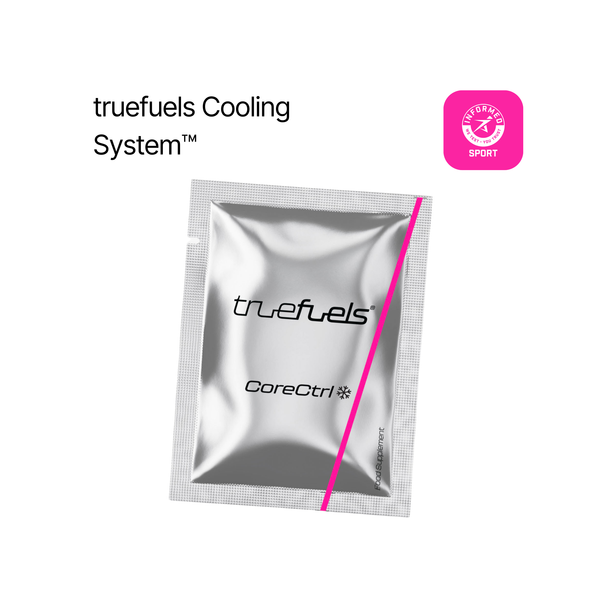
CoreCtrl
Entwickelt, um die Wärmevorbereitung vor wichtigen Trainingsblöcken und Rennen bei Hitze zu unterstützen. Beginnen Sie Ihr Protokoll acht Tage vor dem Ereignis.
Shop CoreCtrl →
Elektrolyte
Täglicher Elektrolytersatz zum Ausgleich von Schweißverlusten und zur Unterstützung der Hydration. Bei heißeren Bedingungen die Zufuhr erhöhen.
Shop Electrolytes →
Performance Gel 40/1.0
40 g Kohlenhydrate mit 1 g Salz. Entwickelt für Sportler, die bei wärmeren Bedingungen trainieren und Wettkämpfe bestreiten, oder für diejenigen, die eine höhere Natriumzufuhr benötigen.
Shop High Salt Gels →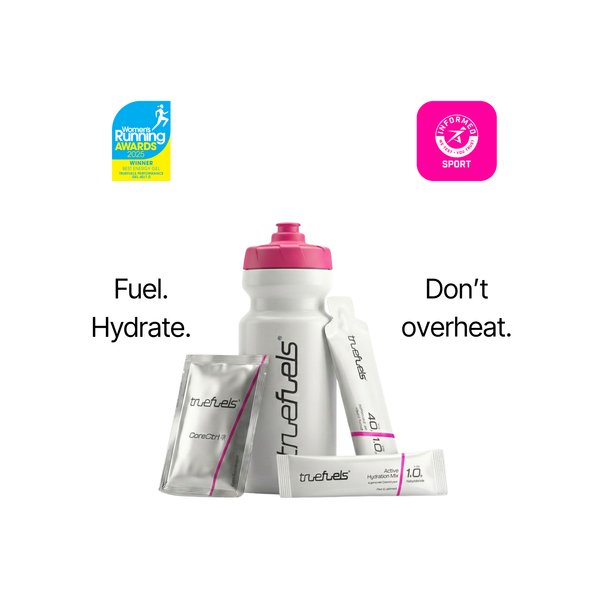
Race Ready System
Das komplette Versorgungssystem für Sportler, die sich auf lange Wettkämpfe in heißer Umgebung vorbereiten. Enthält Gels, Elektrolyte und CoreCtrl.
Shop Race Ready System →One rule to remember
Hitze verändert das Rennen.
Also sollte sie deine Strategie verändern.
Frequently Asked Questions
Hitze erhöht die physiologischen Kosten des Trainings. Die Herzfrequenz steigt, die Schweißrate nimmt zu, der Kohlenhydratverbrauch kann ansteigen und der Elektrolytverlust wird größer. Das gleiche Tempo oder die gleiche Leistungsabgabe wird daher schwerer aufrechtzuerhalten. Hitze lässt das Training nicht nur schlechter anfühlen. Sie verändert die Anforderungen des Ereignisses.
Der Elektrolytbedarf hängt von der Schweißrate, der Temperatur, der Intensität und dem individuellen Natriumverlust ab. Als praktische Richtlinie gilt: Verwenden Sie 1 Beutel pro Stunde bei warmen Bedingungen und 1 bis 2 Beutel pro Stunde bei heißen Bedingungen, je nach Schweißrate. Stark schwitzende Personen benötigen möglicherweise den oberen Bereich, aber die Strategie sollte im Training geübt werden.
Yes. Drink more water. But don't stop there. Water replaces fluid. It does not replace carbohydrate. It does not replace electrolytes. And it does not prepare your body for heat. Hot weather needs a broader heat management strategy, not just a bigger bottle.
Im Allgemeinen ja. Hitze erhöht den physiologischen Aufwand bei körperlicher Betätigung und kann die Kohlenhydratverwertung steigern. Wenn Sie im Training eine höhere Kohlenhydratzufuhr praktiziert haben, ist eine Erhöhung der Zufuhr unter heißen Bedingungen oft vorteilhaft. Heiße Bedingungen können aber auch Magen-Darm-Beschwerden verstärken, daher sollten Sie eine höhere Zufuhr nicht zum ersten Mal am Wettkampftag ausprobieren.
Oft, ja. Wenn eine Trainingseinheit länger oder intensiver ist, kann es angebracht sein, von 1 Truefuels-Gel pro Stunde auf 2 Gele pro Stunde umzusteigen. Bei extremer Hitze oder sehr intensiven Rennen können einige Athleten auf 3 Gele pro Stunde hinarbeiten, jedoch nur, wenn dies geübt wird. Denken Sie in 40-g-Schritten und steigern Sie die Aufnahme schrittweise.
Bereite dich vor, indem du Hitzeanpassungssitzungen, eine ausreichende Kohlenhydratzufuhr, einen angemessenen Elektrolytersatz und das Üben deiner genauen Ernährungsstrategie für den Renntag im Training kombinierst. Wenn du CoreCtrl verwendest, beginne dein Protokoll acht Tage vor dem Event. Der Renntag sollte niemals der erste Zeitpunkt sein, an dem du deinen Plan testest.
Hitzetraining ist die Praxis, die Hitzeadaption erzeugt. Es kann aktiv sein, wie z. B. Sport bei heißen Bedingungen oder das Tragen zusätzlicher Kleidung, oder passiv, wie z. B. die Nutzung von Saunen, heißen Bädern, beheizten Räumen oder Hitzezelten. Ziel ist es, die Körperkerntemperatur über wiederholte Trainingseinheiten zu erhöhen, damit sich der Körper an das Training in der Hitze anpasst.
Active heat training uses exercise to raise core temperature. Passive heat training uses heat exposure around training, such as saunas, hot baths or heat tents. Both can be useful, but the principle is the same: repeated exposure creates adaptation.
Meaningful heat adaptations can begin within approximately 7 to 10 days, although responses vary between athletes. Adaptations can include increased plasma volume, earlier sweating, higher sweat rate and reduced cardiovascular strain. Like fitness, heat adaptation needs practice.
Pre-cooling can help reduce thermal strain before exercise in some hot conditions. Cold drinks, ice slurries, cooling vests, shade and cold towels can all be useful. But pre-cooling is not a replacement for heat adaptation, fuelling, electrolytes or pacing. It is one tool in the system.
For hot weather training, start fuelling earlier than you think. Use 1 truefuels gel per hour for easier or shorter sessions, 2 gels per hour for longer or harder sessions and 3 gels per hour only if practised. Increase electrolytes as conditions become hotter and take gels with water.
The best cooling strategy is a system, not one trick. Prepare with heat adaptation, start fuelling early, replace electrolytes, pace appropriately, use shade or cooling where available and practise the strategy in training. Waiting until you already feel overheated is usually too late.
Continue your learning
Das Verständnis von Hitze ist nur ein Teil der Ausdauerleistung. Erfahren Sie mehr über die Wissenschaft:

The Physics of Heat
Warum nur etwa 20 bis 25 Prozent Ihrer Energie in Bewegung umgewandelt werden und der Rest zu Wärme wird.
Read The Physics of Heat
Heat Acclimation
Wie sich der Körper an Hitze anpasst, warum das Plasmavolumen zunimmt, die Schweißrate steigt und die Herzfrequenz sinkt.
Read Heat Acclimation
Wie viele Kohlenhydrate pro Stunde brauchen Sie wirklich?
Erfahren Sie, wie Kohlenhydratabsorption, Darmtraining und Ernährungsstrategie die Ausdauerleistung bestimmen.
Read How Many Carbs Per Hour
Electrolytes Explained
Why water alone isn't enough and how sodium influences performance.
Read Electrolytes ExplainedBuild your personal strategy
Every athlete is different. Your heat strategy should depend on:
- Event duration
- Temperature
- Sweat rate
- Intensity
- Experience
- Gut tolerance
Use the truefuels Fuel Calculator to calculate:
- Recommended carbohydrate intake
- Electrolyte requirements
- Product recommendations
- Timing strategy
"The hardest races I've done weren't necessarily the hottest. They were the races where I underestimated the heat and got it very wrong. Heat rewards preparation and punishes complacency."
Alistair Brownlee