

How do you prevent muscle cramps during exercise?
Cramps are not random.
They are a warning that the system is under too much strain.
Kurze Antwort: Die beste Strategie gegen Krämpfe ist die Vorbeugung.
Once a muscle fully cramps, there is no magic solution. You can only stop, stretch, drink, take electrolytes and wait. A better strategy is to reduce the chance of cramp before it happens. For most endurance athletes, that means:
- Ersetzen flüssig.
- Ersetzen Natrium.
- Treibstoff ordnungsgemäß.
- Tempo appropriately.
- Vorbereiten für Wärme.
- Zug die Muskeln für die Anforderungen des Rennens.
Krämpfe sind selten nur auf eine Ursache zurückzuführen.
Daher sollte auch die Lösung nicht nur eine einzelne sein.
Alistair's Perspective
"Die Ursache von Krämpfen wird heiß diskutiert. Ich glaube nicht, dass irgendjemand ehrlich behaupten kann, es gäbe eine einzige Erklärung, die für jeden Sportler in jedem Rennen gilt. Aber ich glaube, dass wir die meisten Krämpfe verhindern können, indem wir die Grundlagen richtig machen. Wenn Sie gut versorgt, gut hydriert sind, Elektrolyte ersetzen, richtig pacen und für die Anforderungen des Rennens konditioniert sind, haben Sie viele der Gründe beseitigt, warum Krämpfe auftreten. Bei einer besonders denkwürdigen Gelegenheit nahm ich an einem Ultra-Bike-Rennen in Südspanien teil. Beim Wechseln eines platten Reifens bekam ich extreme Krämpfe in den Händen, und sie funktionierten überhaupt nicht mehr. Ich musste den Reißverschluss meiner Tasche mit den Zähnen öffnen, ein Salzpäckchen finden und rohes Salz essen. In diesem Fall hat es funktioniert."
— Alistair Brownlee, two-time Olympic triathlon champion & truefuels co-founder


Warum
Die Antwort beginnt mit Kontrolle.
Ein Muskelkrampf ist eine plötzliche, schmerzhafte, unwillkürliche Kontraktion. Der Muskel zieht sich zusammen, wenn man es nicht will. Noch wichtiger ist, dass er sich nicht richtig entspannt. Das bedeutet, dass es bei einem Krampf nicht nur um den Muskel selbst geht. Es geht um die Kontrolle dieses Muskels unter Stress. Ihre Muskeln werden durch Signale des Nervensystems gesteuert. Bei längerem oder intensivem Training steht dieses System unter Druck. Ermüdung baut sich auf. Elektrolyte gehen durch Schweiß verloren. Flüssigkeitsverluste akkumulieren sich. Hitze erhöht die physiologische Belastung. Die Kraftstoffverfügbarkeit kann sinken. Der Muskel zieht sich tausende Male zusammen und entspannt sich wieder. Schließlich kommt es bei einigen Athleten und unter bestimmten Bedingungen eher dazu, dass das System die Kontrolle verliert. Der Muskel zieht sich zusammen und entspannt sich nicht richtig. Das ist ein Krampf.
Why the cause is debated
Belastungsbedingte Muskelkrämpfe sind nicht vollständig verstanden. Eine Erklärung konzentriert sich auf eine veränderte neuromuskuläre Kontrolle. Einfach ausgedrückt bedeutet dies, dass Ermüdung das Gleichgewicht der Signale verschiebt, die dem Muskel sagen, sich zusammenzuziehen und zu entspannen. Eine andere Erklärung konzentriert sich stärker auf Dehydration und Elektrolytverlust. In Wirklichkeit liegen viele Athleten wahrscheinlich irgendwo zwischen diesen Erklärungen. Ein langer Wettkampf erzeugt nicht nur eine Belastung. Er erzeugt viele. Ermüdung. Hitze. Schweißverlust. Natriumverlust. Kohlenhydratmangel. Wiederholte mechanische Belastung. Tempofehler. Deshalb ist der beste praktische Ansatz nicht, über eine einzelne Ursache zu streiten. Es geht darum, so viele Risikofaktoren wie möglich zu reduzieren.
Why electrolytes matter
Elektrolyte helfen, den Flüssigkeitshaushalt, die Nervensignale und die Muskelkontraktion zu regulieren. Das wichtigste Elektrolyt für Ausdauersportler ist in der Regel Natrium, da es in größten Mengen durch Schwitzen verloren geht. Kalium und Magnesium sind ebenfalls wichtig, aber Natrium ist normalerweise der erste Ansatzpunkt bei langen, heißen oder schweißtreibenden Einheiten. Wenn Natriumverluste groß werden und nicht ersetzt werden, werden die Bedingungen für eine normale Muskelfunktion schwerer aufrechtzuerhalten. Das bedeutet nicht, dass jeder Krampf durch Natriumverlust verursacht wird. Es bedeutet, dass Natriumverlust eine der Variablen ist, die Sie kontrollieren können. Und im Ausdauersport ist es wichtig, das Kontrollierbare zu kontrollieren.
Why fatigue matters too
Ein Krampf tritt oft spät auf. Die letzten 10 km eines Marathons. Die letzte Stunde einer Ironman-Radfahrt. Der erste Teil des Laufs nach einer langen Fahrt. Der steile Anstieg am Ende eines Sportive. Das ist kein Zufall. Ermüdung verändert das Verhalten der Muskeln. Wenn die Muskeln ermüden, muss das Nervensystem härter arbeiten, um die Bewegung zu koordinieren. Die Lauftechnik ändert sich. Die Trittmechanik ändert sich. Der Bodenkontakt ändert sich. Kleine Schwächen werden größer. Die Wade ist ein klassisches Beispiel. Bei einem Marathon absorbiert sie wiederholte Belastungen über Tausende von Schritten. Wenn der Natriumverlust hoch, die Kohlenhydrate niedrig, das Tempo zu aggressiv ist und der Muskel bereits ermüdet ist, steigt das Risiko. Ein Krampf ist normalerweise der Punkt, an dem mehrere Probleme gleichzeitig auftreten.
Was sind bewegungsassoziierte Muskelkrämpfe?
Exercise-associated muscle cramps are sudden, painful, involuntary muscle contractions that happen during or after exercise. They are usually linked to a combination of fatigue, altered neuromuscular control, sweat loss, sodium loss, heat, pacing and training history.

Na und
The science is interesting. What matters is how it changes your strategy.
Zu wissen, dass Krämpfe kompliziert sind, verhindert sie nicht. Eine Änderung der Vorbereitung tut es. Für die meisten Athleten besteht eine gute Strategie zur Krampfvorbeugung aus vier Teilen:
- Elektrolyte
- Kohlenhydrate
- Pacing
- Spezifisches Konditionstraining
Das Ziel ist nicht, zu garantieren, dass Sie nie Krämpfe bekommen. Das kann niemand versprechen. Ziel ist es, die Anzahl der Faktoren zu reduzieren, die Sie in Richtung Krampf treiben. Betrachten Sie es als Risikominimierung.
| Risikofaktor | Was es bedeutet | Was zu tun ist |
|---|---|---|
| Natriumverlust | Schweiß entfernt Salz aus dem System | Natrium mit Gels und Elektrolyten ersetzen |
| Flüssigkeitsverlust | Blutvolumen und Kühlung werden schwerer aufrechtzuerhalten | Konstant trinken |
| Kohlenhydratmangel | Ermüdung steigt und Form bricht zusammen | Frühzeitig und konsequent Energie zuführen |
| Hitze | Schweißrate und physiologische Belastung steigen | Auf Hitze vorbereiten und Elektrolyte erhöhen |
| Muskelermüdung | Kontrolle wird unter Belastung schwieriger | Spezifisch für die Rennanforderungen trainieren |
| Schlechtes Pacing | Ermüdung tritt zu früh ein | Kontrolliert starten |
Die beste Strategie zur Krampfvorbeugung ist nicht kompliziert. Sie ist konsequent.
"Als ich noch Schüler war, bin ich nach der Schule von 16:30 bis 18:30 Uhr schwimmen gegangen. Zu diesem Zeitpunkt war ich oft schon Fahrrad gefahren und gelaufen. Gleichzeitig hatte die Schule, glaube ich, einen Gesundheitskurs eingeführt und den Salzgehalt in den Schulmahlzeiten reduziert. Ich bekam in diesen Schwimmeinheiten regelmäßig Krämpfe. Sobald ich meinem Mittagessen zusätzliches Salz hinzufügte, hörten die Krämpfe auf. Das beweist nicht, dass jeder Krampf mit Salz zusammenhängt, aber es hat mir früh gelehrt, dass die Grundlagen wichtig sind."
Alistair Brownlee

A common mistake
"Krämpfe sind willkürlich und unvermeidlich."
Das ist der Fehler. Krämpfe können sich zufällig anfühlen. Aber das bedeutet nicht, dass sie unvermeidlich sind. Ja, ein hartes Rennen ermüdet die Muskeln. Das ist der Punkt. Es gibt keine Möglichkeit, einen harten Marathon, Ironman, ein Sportevent oder ein langes Rennen zu absolvieren, ohne müde Muskeln zur Weiterarbeit aufzufordern. Aber genau deshalb ist das Wesentliche wichtig. Wenn Ihre Muskeln extrem ermüdet sein werden, welches Szenario gibt Ihnen die bessere Chance? Ein Körper, der unterversorgt, dehydriert und natriumarm ist? Oder ein Körper, der gut versorgt, hydriert und einen besseren Elektrolythaushalt hat? Man kann Ermüdung beim Rennen nicht vermeiden. Aber man kann entscheiden, in welchem Zustand sich der Körper befindet, wenn die Ermüdung eintritt.
"Ich sehe das so: Bei einem anstrengenden Rennen werden die Muskeln extrem ermüdet sein. Das lässt sich nicht vermeiden. Aber in dieser Situation, wollen Sie, dass sie gut hydriert, gut versorgt und in einem guten Elektrolytgleichgewicht sind, oder nicht? Welches Szenario vermeidet Krämpfe eher? Das ist für mich die praktische Frage."
Alistair Brownlee

Und jetzt
Entwickeln Sie Ihre Strategie zur Krampfvorbeugung vor dem Wettkampftag.
Man kann nicht jedes Krampf-Risiko kontrollieren. Aber viele davon schon. Fangen Sie mit den Grundlagen an:
- Ersetzen Sie, was der Schweiß entzieht.
- Tanken Sie auf, bevor die Kohlenhydratspeicher zur Neige gehen.
- Bereiten Sie sich auf Hitze vor.
- Teilen Sie Ihr Tempo für die gesamte Veranstaltung ein, nicht nur für die erste Hälfte.
- Trainieren Sie die Muskeln für die genauen Anforderungen des Rennens.
- Üben Sie Ihre Strategie im Training.
Krampfvorbeugung ist nichts, was man auf dem letzten Kilometer noch hinzufügt. Es ist etwas, das man über den gesamten Trainingsblock aufbaut.

Electrolytes for cramps
Beugen Elektrolyte tatsächlich Krämpfen vor?
Sie können helfen, das Risiko zu reduzieren, wenn Elektrolytverlust Teil des Problems ist. Aber sie sind keine Magie. Elektrolyte unterstützen den Flüssigkeitshaushalt, die Nervensignale und die Muskelkontraktion. Wenn Sie Natrium durch Schwitzen verlieren und es nicht ersetzen, insbesondere während langer, heißer oder intensiver Trainingseinheiten, erschweren Sie die Kontrolle des Systems. Eine nützliche Faustregel lautet:
Wenn die Trainingseinheit lang oder hart genug ist, dass Sie Kohlenhydrate benötigen, ist sie normalerweise auch lang oder hart genug, dass Elektrolyte eine Rolle spielen. Truefuels-Gels enthalten bereits Kohlenhydrate und Salz, sodass Gels bei vielen Trainingseinheiten, insbesondere unter kühlen oder moderaten Bedingungen, beide Aufgaben während des Sports abdecken können. Bei stärkerem Schweißverlust benötigen Sie jedoch möglicherweise zusätzliche Elektrolyte. Hier kommen die Truefuels Elektrolyte ins Spiel. Die Gels liefern Energie und etwas Salz. Elektrolyte geben Ihnen zusätzliche Kontrolle bei stärkerem Schweißverlust.
Wie viel Natrium braucht man, um Krämpfen vorzubeugen?
Es gibt keine einzelne Natriumzahl, die Krämpfe bei jedem verhindert. Sportler verlieren sehr unterschiedliche Mengen an Natrium durch Schwitzen. Ein praktischer Bereich, der oft für Ausdauersportler verwendet wird, beträgt ungefähr 200 mg bis 2.000 mg Natrium pro Stunde, abhängig von Schweißrate, Temperatur und Intensität. Dies entspricht ungefähr 500 mg bis 5.000 mg Salz. Das Ziel ist nicht, Natrium zu maximieren. Das Ziel ist, genug von dem zu ersetzen, was Sie verlieren. Wenn die Bedingungen heißer werden, steigt normalerweise die Schweißrate. Mit zunehmender Dauer sammeln sich die Verluste an. Wenn die Schweißverluste steigen, wird die Elektrolytstrategie wichtiger.

Cramping during a marathon
Was verursacht Wadenkrämpfe bei einem Marathon?
Wadenkrämpfe treten bei einem Marathon meist aus gutem Grund erst spät auf. Bis dahin können sich mehrere Dinge summiert haben:
- Muskelermüdung
- Natriumverlust
- Flüssigkeitsverlust
- Kohlenhydratmangel
- Hitzestress
- Pacing-Fehler
- Wiederholte Belastung
Die Wade durchläuft Tausende von Dehnungs-Verkürzungs-Zyklen. Wenn der Muskel ermüdet, unterversorgt ist und in einem Körper arbeitet, der Flüssigkeit und Natrium verliert, wird die Kontrolle schwieriger. Deshalb treten Krämpfe oft bei 30 km, 35 km oder kurz vor dem Ziel auf. Es liegt nicht daran, dass die Wade plötzlich schwach geworden ist. Es liegt daran, dass sich das System um sie herum verändert hat.
Wie vermeide ich Krämpfe beim Marathonlauf?
Beginnen Sie vor dem Rennen. Im Training:
- Üben Sie lange Läufe im Renntempo.
- Stärken Sie Waden und hintere Oberschenkelmuskulatur.
- Trainieren Sie bergab und mit müden Beinen, falls das Rennen es erfordert.
- Üben Sie Ihre Gel- und Elektrolytstrategie.
- Finden Sie heraus, wie viel Flüssigkeit Sie normalerweise vertragen.
Am Wettkampftag:
- Beginnen Sie früh mit der Energiezufuhr.
- Verwenden Sie Gels für Kohlenhydrate und Salz.
- Fügen Sie Elektrolyte hinzu, wenn die Bedingungen heiß sind oder der Schweißverlust hoch ist.
- Gehen Sie die erste Hälfte vernünftig an.
- Reagieren Sie frühzeitig, wenn ein Muskel anfängt zu verkrampfen.
Wenn ein Muskel vollständig verkrampft, müssen Sie möglicherweise anhalten, dehnen und ihn sich entspannen lassen. Deshalb ist Prävention wichtig.

Taurine and cramps
Hilft Taurin, Muskelkrämpfen vorzubeugen?
Taurin ist an verschiedenen Prozessen beteiligt, die für die Muskelfunktion, die Kalziumverwertung und die neuromuskuläre Regulation wichtig sind. Das macht es zu einem interessanten Inhaltsstoff für Sportler, die das umfassendere System zur Reduzierung des Krampf-Risikos unterstützen möchten. Taurin sollte jedoch nicht als alleiniges Krampfmittel angesehen werden. Bei truefuels betrachten wir es als Teil einer größeren Strategie. CoreCtrl enthält 4.000 mg L-Taurin pro Beutel und wurde entwickelt, um die Hitzepreparation und die neuromuskuläre Funktion als Teil des gesamten truefuels Systems zu unterstützen. In Verbindung mit Elektrolyten, Kohlenhydraten, Pacing und Training bietet es Sportlern ein weiteres Werkzeug. Keine Garantie. Ein Werkzeug.

Tägliche Gewohnheiten
Krampfprävention beginnt vor dem Rennen.
Viele Athleten versuchen, Krämpfe erst dann zu beheben, wenn sie auftreten. Das ist meistens zu spät. Ein besserer Ansatz ist es, tägliche Gewohnheiten zu entwickeln, die die Wahrscheinlichkeit verringern, diesen Punkt zu erreichen.
| Wann | Was tun | Warum |
|---|---|---|
| Morgens an Trainingstagen | 1 Elektrolytbeutel in 500 ml Wasser | Den Tag ausgeglichen beginnen |
| Bei Einheiten über 60 Minuten | Gels, Elektrolyte oder beides verwenden, je nach Bedingungen | Kohlenhydrate und Salze ersetzen |
| Heiße oder schweißtreibende Einheiten | Elektrolyte erhöhen und 40/1.0 Gels in Betracht ziehen | Höhere Schweißverluste ausgleichen |
| Nach dem Training | 1 Elektrolytbeutel in 500 ml Wasser | Erholung unterstützen und Bereitschaft für den nächsten Tag |
| Rennwoche | Die genaue Strategie üben und CoreCtrl in Betracht ziehen | Zufälligkeiten eliminieren |
Es geht nicht darum, mehr Produkte zu nehmen. Es geht darum, die Funktion jedes Produkts zu kennen.
Warum wir truefuels Electrolytes und CoreCtrl entwickelt haben
Die meisten Krämpfe-Ratschläge setzen zu spät an. Dehnen, wenn man Krämpfe hat. Trinken, wenn man Krämpfe hat. Salz nehmen, wenn man Krämpfe hat. Wir wollten Produkte für den wichtigeren Teil entwickeln. Die Vorbereitung. Elektrolyte wurden entwickelt, um das zu ersetzen, was der Schweiß entzieht. CoreCtrl wurde als weiteres Werkzeug für Sportler entwickelt, die sich auf Hitze, hohe Schweißraten und anspruchsvolle Rennen vorbereiten. Die Produkte funktionieren am besten, wenn sie als Teil eines Systems verwendet werden:
- Gels für Kohlenhydrate und Salz
- Elektrolyte für zusätzliche Kontrolle bei höheren Schweißverlusten
- CoreCtrl als Teil der Hitzevorbereitung
- Training zur Konditionierung der Muskeln für das Rennen
Ziel ist es nicht, die Krampfprävention kompliziert zu machen. Ziel ist es, sie wiederholbar zu machen.
"I wanted the system to be simple. If you need fuel, use gels. If sweat losses are high, add Electrolytes. If heat is a major factor, prepare properly. The point is not to keep adding products. The point is to know what problem you are solving."
Alistair Brownlee — Two-time Olympic Triathlon Champion
Which products should you use?
| Ziel | Empfohlenes Produkt |
|---|---|
| Täglicher Elektrolytersatz | Electrolytes |
| Kohlenhydrate und Salz während der Session | Performance Gel 40/0.25 oder 40/1.0 |
| Heiße Rennen oder starkes Schwitzen | Performance Gel 40/1.0 plus Electrolytes |
| Hitzetraining | CoreCtrl |
| Darmtraining und Hydratationspraxis | Training Bundle |
| Vollständige Strategie zur Vorbeugung von Krämpfen | Race Ready System |

Elektrolyte
400 mg sodium, 150 mg potassium and 25 mg magnesium per sachet. Designed for daily training hydration and electrolyte replacement. Use in 500 ml water.
Shop Electrolytes →
Performance Gel 40/1.0
40 g carbohydrate with 1 g salt. A simple option when you need carbohydrate and higher salt during warmer conditions, hot races or heavy sweat sessions.
Shop Performance Gel 40/1.0 →
Performance Gel 40/0.25
40 g Kohlenhydrate mit 0,25 g Salz. Eine einfache Option, wenn du Kohlenhydrate und etwas Salz während des Trainings oder Rennens bei kühleren Bedingungen benötigst.
Shop Performance Gel 40/0.25 →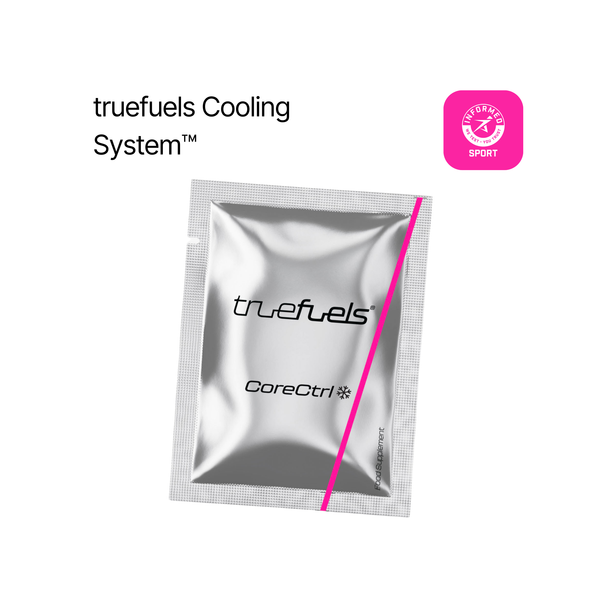
CoreCtrl
Designed to support heat preparation before key training blocks and hot races. Contains 4,000 mg L-Taurine per sachet. Best used alongside heat adaptation, electrolytes, carbohydrate and sensible pacing.
Shop Race Ready System →One rule to remember
Krämpfe sind selten nur eine Sache.
Die Vorbeugung sollte es auch nicht sein.
Frequently Asked Questions
Muscles cramp during exercise when the muscle contracts involuntarily and does not relax properly. The cause is debated and usually multifactorial. Fatigue, altered neuromuscular control, heat, sweat loss, sodium loss, pacing and training history can all contribute.
Elektrolyte können helfen, das Krampf-Risiko zu mindern, wenn Elektrolytverlust Teil des Problems ist. Natrium, Kalium und Magnesium unterstützen den Flüssigkeitshaushalt, die Nervensignale und die Muskelkontraktion. Krämpfe werden jedoch nicht immer nur durch Elektrolyte verursacht, daher sollte die Prävention auch die Energieversorgung, das Tempo, die Hitzevorbereitung und eine spezielle Konditionierung umfassen.
Calf cramps in a marathon often occur late because fatigue, sodium loss, fluid loss, carbohydrate depletion, heat stress and repeated impact have accumulated. The calf carries repeated loads for thousands of steps. When the muscles and nervous system are fatigued, the risk of cramping rises.
Taurin ist an Prozessen der Muskelfunktion, des Kalziumhaushalts und der neuromuskulären Regulation beteiligt. CoreCtrl enthält 4.000 mg L-Taurin pro Beutel und wurde als Teil einer umfassenderen Hitze- und neuromuskulären Vorbereitungsstrategie entwickelt. Es sollte zusammen mit Elektrolyten, Kohlenhydraten, Pacing und Training verwendet werden, anstatt als alleiniges Mittel gegen Krämpfe betrachtet zu werden.
If you catch it early, when the muscle is tightening but not fully locked, you may be able to stop, stretch, slow down and take fluid and electrolytes. Once a muscle fully cramps, it usually takes time to release. That is why prevention is more reliable than rescue.
Es gibt nicht den einen besten Elektrolyten für jeden Krampf. Für Ausdauersportler ist Natrium gewöhnlich der erste Elektrolyt, den man in Betracht ziehen sollte, da er in größten Mengen über den Schweiß verloren geht. Kalium und Magnesium sind ebenfalls wichtig, aber zur Vorbeugung von Krämpfen sollten Flüssigkeitszufuhr, Natrium, Kohlenhydrate, richtiges Tempo, Hitzevorbereitung und spezifisches Training gehören.
Start before race day. Practise race pace long runs, condition the calves, fuel early, replace sodium, use gels consistently, and add Electrolytes when conditions are hot or sweat losses are high. On race day, pace sensibly and respond early if a muscle starts to tighten.
Es gibt keine einzelne Natriumdosis, die Krämpfe bei jedem verhindert. Ein praktischer Bereich für Ausdauersportler kann je nach Schweißrate, Temperatur und Intensität zwischen 200 mg und 2.000 mg Natrium pro Stunde liegen. truefuels Gele enthalten bereits Salz, und Elektrolyte können bei höherem Schweißverlust hinzugefügt werden.
Often, yes. Heat increases sweat rate, sodium loss, cardiovascular strain and fatigue. Those factors can all increase cramp risk in susceptible athletes. The first hot race of the year can be especially difficult because your body may not yet be heat adapted.
Für den Ironman ist die beste Strategie ein System. Verwenden Sie Gele für Kohlenhydrate und Salz, fügen Sie Elektrolyte hinzu, wenn der Schweißverlust hoch ist, üben Sie die Strategie in langen Trainingseinheiten, bereiten Sie sich auf Hitze vor, fahren Sie das Rad vernünftig und konditionieren Sie die Muskeln für den Lauf. Kleine Fehler werden bei langen Rennen zu großen Fehlern.
Magnesium matters for normal muscle function, but endurance cramps are not usually solved by magnesium alone. Sodium losses are often much larger during exercise. truefuels Electrolytes contain sodium, potassium and magnesium to support a broader electrolyte strategy.
Continue your learning
Elektrolyte zu verstehen, ist nur ein Teil der Ausdauerleistung. Erfahren Sie mehr über die Wissenschaft:

Electrolytes Explained
Water replaces fluid. Electrolytes replace what sweat takes away.
Read Electrolytes Explained
Ernährung beim Training in der Hitze
Why hot conditions increase sweat losses, carbohydrate needs and cramp risk.
Lesen Sie Ernährung für Training in der Hitze
Wie viele Kohlenhydrate pro Stunde brauchen Sie wirklich?
Erfahren Sie, wie Kohlenhydratabsorption, Darmtraining und Ernährungsstrategie die Ausdauerleistung bestimmen.
Read How Many Carbs Per Hour
Ernährungsstrategien für Ausdauersportler
Ein umfassenderer Leitfaden zu Ausdauerernährung, Kohlenhydratzufuhr und Leistungsoptimierung.
Ernährungsbezogene Best Practices lesenBuild your personal strategy
Jeder Sportler ist anders.
Ihre Strategie zur Vorbeugung von Krämpfen sollte abhängen von:
- Dauer des Wettkampfs
- Temperatur
- Schweißrate
- Natriumverlust
- Intensität
- Trainingshistorie
- Muskelkonditionierung
- Ob Sie bereits Salz über Gele zu sich nehmen
Use the truefuels Fuel Calculator to calculate:
- Recommended carbohydrate intake
- Electrolyte requirements
- Product recommendations
- Timing strategy
"The goal is not to find one magic cramp cure. The goal is to remove as many reasons to cramp as possible. Fuel properly. Replace what you lose. Prepare for heat. Train the muscles for the race. Simple things done consistently are usually what make the difference."
Alistair Brownlee