

How many electrolytes do you need during exercise?
Water is only part of the solution.
What matters is what you're losing when you sweat.
Kurze Antwort: Bei kurzen, lockeren Trainingseinheiten reicht Wasser meist aus. Bei längeren Einheiten, warmen Bedingungen und starkem Schwitzen sind Elektrolyte wichtig.
If you are exercising for less than 60 minutes in cool conditions, water alone is usually adequate. For anything longer, hotter or sweatier, you need to think about what you are losing in sweat. As a practical starting point:
- Leichte Einheit unter 60 Minuten bei kühlen Bedingungen: water is usually enough
- Training day where you sweat: 1 Elektrolytbeutel in 500 ml Wasser
- Session over 60 minutes: 1 sachet per hour
- Warm or hot conditions: 1 bis 2+ Beutel pro Stunde, je nach Schweißrate
- Heavy sweater or hot race: trainieren Sie den oberen Bereich der Intensität
Das Prinzip ist einfach. Wasser ersetzt Flüssigkeit. Elektrolyte ersetzen das, was der Schweiß entzieht. Aber bei vielen Trainingseinheiten übernehmen truefuels Gele bereits einen Teil dieser Aufgabe. Jedes truefuels Performance Gel enthält Kohlenhydrate und Elektrolyte. Das bedeutet, dass für viele Athleten, besonders bei kühleren Bedingungen, die Energiezufuhr während einer Trainingseinheit oder eines Rennens sehr einfach gehalten werden kann. Verwenden Sie Gele für Kohlenhydrate und Salz während des Trainings. Verwenden Sie Elektrolyte, wenn der Schweißverlust höher ist oder wenn Sie keine Kohlenhydrate zu sich nehmen möchten. Verwenden Sie Elektrolyte vor und nach dem Training, um ausgeglichen zu starten und zu enden. Eine nützliche Regel lautet: Wenn eine Trainingseinheit lang oder hart genug ist, dass Sie Kohlenhydrate benötigen, ist sie normalerweise auch lang oder hart genug, dass Elektrolyte wichtig sind.
Alistair's Perspective
"Jahrelang dachte ich, Hydrierung bedeutet, mehr zu trinken. Irgendwann wurde mir klar, dass die bessere Frage nicht nur war, wie viel Flüssigkeit ich verlor. Es war, was ich in dieser Flüssigkeit verlor. Jetzt hat sich mein Fokus darauf verlagert, sicherzustellen, dass ich nach dem Training meine beste Leistung erbringen kann. In Besprechungen und bei der Arbeit. Ich habe festgestellt, dass eine bewusste Elektrolytzufuhr vor, während und nach dem Training meine Konzentration wirklich fördert."
— Alistair Brownlee, two-time Olympic triathlon champion & truefuels co-founder

Warum
The answer starts with sweat.
Schweiß ist nicht nur Wasser. Er enthält Mineralien, die als Elektrolyte bekannt sind. Die wichtigsten für Ausdauersportler sind:
- Natrium
- Kalium
- Magnesium
- Chlorid
- Kalzium
Diese Mineralien tragen eine elektrische Ladung. Deshalb werden sie Elektrolyte genannt. Sie helfen bei der Regulierung von:
- Flüssigkeitshaushalt
- Blutvolumen
- Nervenleitung
- Muskelkontraktion
- Herz-Kreislauf-Funktion
Stellen Sie sich Elektrolyte als Teil des Kommunikationssystems des Körpers vor. Ihre Muskeln ziehen sich nicht zusammen, weil sie es wollen. Sie ziehen sich zusammen, weil elektrische Signale ihnen dazu den Befehl geben. Elektrolyte helfen diesen Signalen, richtig zu funktionieren.
Why sodium matters most
Alle Elektrolyte sind wichtig. Aber beim Ausdauersport ist Natrium meist das erste, worauf man sich konzentrieren sollte. Warum?
Weil Natrium über den Schweiß in den größten Mengen verloren geht. Einige Sportler verlieren relativ wenig Natrium. Andere verlieren viel. Zwei Sportler können Seite an Seite, im gleichen Tempo, unter den gleichen Bedingungen laufen und dennoch sehr unterschiedliche Natriumverluste haben. Deshalb sollte die Hydrationsstrategie individuell sein. Sie hängt ab von:
- Schweißrate
- Temperatur
- Luftfeuchtigkeit
- Trainingsintensität
- Körpergröße
- Fitness
- Hitzeanpassung
- Individuelle Schweiß-Natrium-Konzentration
Das ist auch der Grund, warum pauschale Ratschläge oft scheitern. Einige Sportler benötigen sehr wenig Elektrolytersatz. Andere benötigen viel.
Wie viel Natrium verlieren Sportler?
Natriumverluste variieren enorm. Eine Person, die bei kühlen Bedingungen leicht schwitzt, verliert möglicherweise relativ wenig Natrium. Eine Person, die bei heißen Bedingungen stark schwitzt, kann wesentlich mehr verlieren. Ein oft verwendeter praktischer Bereich für Ausdauersportler liegt bei etwa 200 mg bis 2.000 mg Natrium pro Stunde, abhängig von der Schweißrate, der Temperatur und der Intensität. Dies entspricht ungefähr 500 mg Salz bis 5.000 mg Salz. Dieser Bereich ist breit, da Sportler unterschiedlich sind. Der wichtige Punkt ist nicht, eine perfekte Zahl für alle zu finden. Der wichtige Punkt ist, die Richtung zu verstehen. Wenn die Schweißrate steigt, steigt der Natriumverlust. Wenn die Bedingungen heißer werden, steigt der Natriumverlust normalerweise an. Mit zunehmender Dauer sammelt sich das Defizit an.
Warum Wasser allein nicht immer ausreicht
Wasser ist wichtig. Aber Wasser allein ersetzt kein Natrium. Das ist das Problem. Wenn Sie bei langen oder heißen Sessions Flüssigkeit trinken, ohne Elektrolyte zu ersetzen, können Sie zwar Wasser, aber nicht die im Schweiß verlorenen Mineralien wieder auffüllen. In einigen Situationen kann das Trinken sehr großer Mengen einfachen Wassers ohne Natrium den Blutnatriumspiegel verdünnen. Dies wird Hyponatriämie genannt. Sie kann Übelkeit, Kopfschmerzen, Verwirrung und in schweren Fällen ernsthafte medizinische Probleme verursachen. Das bedeutet nicht, dass Sie Wasser meiden sollten. Es bedeutet, dass Sie verstehen sollten, was Wasser tut und was nicht. Wasser ersetzt Flüssigkeit. Es ersetzt kein Natrium.

Na und
The physiology is interesting. What matters is how it changes your strategy.
Die Kenntnis, dass Schweiß Natrium, Kalium und Magnesium enthält, macht dich nicht schneller. Zu wissen, was man mit diesen Informationen anfängt, schon. Für die meisten Ausdauersportler ist das Ziel einfach:
- Flüssigkeit ersetzen.
- Elektrolyte ersetzen.
- Beginnen, bevor der Mangel groß wird.
- Die Strategie im Training üben.
- Die Zufuhr anpassen, wenn sich die Bedingungen ändern.
Du musst die Hydratation nicht zur Mathematik machen. Du brauchst ein System, das du wiederholen kannst.
Wie viele Elektrolyt-Beutel sollte ich einnehmen?
Denken Sie in Bedingungen.
| Situation | truefuels Strategie |
|---|---|
| Trainingseinheit unter 60 Minuten bei kühlen Bedingungen | Wasser ist normalerweise ausreichend |
| Trainingstag, an dem Sie schwitzen | 1 Beutel in 500 ml Wasser |
| Trainingseinheit über 60 Minuten bei kühlen Bedingungen | 1 Beutel pro Stunde (oder Elektrolyte aus Gels) |
| Warme Bedingungen über 22°C | 1 bis 2 Beutel pro Stunde (oder Elektrolyte aus Gels) |
| Heiße Bedingungen oder starker Schwitzer | Bis zu 2 Beutel pro Stunde, falls geübt (oder Elektrolyte aus Gels) |
| Nach dem Training | 1 Beutel in 500 ml Wasser |
Die genaue Menge variiert zwischen den Athleten. Die Strategie muss nicht kompliziert sein. Beginnen Sie mit einem Beutel. Erhöhen Sie die Menge, wenn die Trainingseinheit länger, heißer oder schweißtreibender wird.
Do I need electrolytes if my gels already contain salt?
Manchmal ist die Antwort nein. Das ist ein Grund, warum wir Salz in jedes truefuels Performance Gel integriert haben. Während des Trainings versuchen die meisten Athleten, zwei Probleme gleichzeitig zu lösen:
- Kohlenhydrate zuführen
- Einen Teil des durch Schwitzen verlorenen Salzes ersetzen.
truefuels Gele tun beides.
Das Performance Gel 40/0.25 liefert 40 g Kohlenhydrate mit 0,25 g Salz (ca. 100 mg Natrium).
Das Performance Gel 40/1.0 liefert 40 g Kohlenhydrate mit 1 g Salz (ca. 400 mg Natrium).
Das bedeutet, dass du bei vielen Trainingseinheiten, besonders unter kühlen oder moderaten Bedingungen, die Energiezufuhr während der Session einfach halten und Gele als Hauptenergiequelle verwenden kannst.
Es gibt jedoch Situationen, in denen du zusätzliche Elektrolyte benötigst:
- Heiße Bedingungen
- Starkes Schwitzen
- Lange Trainingseinheiten
- Indoor-Training
- Rennen bei hoher Luftfeuchtigkeit
- Krampfanfällige Athleten
- Athleten mit sichtbaren Salzflecken auf der Kleidung
- Zeiten, in denen du Elektrolyte ohne zusätzliche Kohlenhydrate benötigst
Hier passen die truefuels Elektrolyte. Die Gele decken den Brennstoffbedarf und einen Teil des Salzes ab. Elektrolyte geben dir zusätzliche Kontrolle, wenn der Schweißverlust höher ist.
"The best hydration strategy isn't the one with the biggest bottle. It's the one that replaces what you're actually losing. Sometimes that can come from truefuels gels. Sometimes you need extra electrolytes. The point is to know the job each product is doing."
Alistair Brownlee

A common mistake
"Ich brauche Elektrolyte nur am Renntag."
Das höre ich ständig. Elektrolyte werden oft wie ein Notfallprodukt behandelt. Etwas, das man bei Hitze nimmt. Etwas, das man bei Krämpfen nimmt. Etwas, das man am Wettkampfmorgen nimmt. Aber Elektrolytverlust ist nicht nur ein Wettkampftagsproblem. Man schwitzt beim Training. Man schwitzt drinnen. Man schwitzt im Winter. Man schwitzt an leichten Trainingstagen. Die Menge ändert sich. Der Bedarf verschwindet nicht. Wenn man regelmäßig trainiert, können sich kleine tägliche Verluste über die Woche ansammeln, besonders wenn die Trainingsbelastung hoch oder die Bedingungen warm sind. Deshalb sollten Elektrolyte nicht nur als Wettkampfprodukt angesehen werden. Sie sind Teil des Trainingssystems. Das Ziel ist nicht, eine schlechte Hydratationsstrategie zu retten. Das Ziel ist, die nächste Trainingseinheit im Gleichgewicht zu beginnen.
"I often made the mistake of treating hydration as something that only mattered during the race. I realised it was something I had to manage every day. Race day should just be an extension of the habits you built in training."
Alistair Brownlee

Und jetzt
Integrieren Sie Elektrolyte in Ihr Trainingsprogramm.
Ihre Tankstrategie sollte nicht erst am Renntag beginnen. Ihre Hydrationsstrategie ebenfalls nicht. Bauen Sie Ihre Elektrolyt-Routine um drei Momente auf:
| Wann | Dosis | Bedingungen | Warum |
|---|---|---|---|
| Morgens nach dem Aufwachen | 1 Beutel in 500 ml | Alle Trainingstage | Ersetzt nächtliche Verluste. Beginnt den Tag im Gleichgewicht. |
| Während Einheiten über 60 Minuten | 1 pro Stunde kühl. 1 bis 2 pro Stunde über 18°C (oder Elektrolyte aus Gels) | Kühl, warm oder heiß | Ersetzt aktive Schweißverluste. Erhält die neuromuskuläre Funktion. |
| Nach dem Training | 1 Beutel in 500 ml | Alle Trainingstage | Beschleunigt die Wiederherstellung der Elektrolyte. Unterstützt die Bereitschaft für den nächsten Tag. |
20 Beutel pro Packung reichen für ca. 6 bis 10 Tage tägliche Trainingsversorgung. Dies ist nicht nur ein Produkt für den Renntag. Es ist ein wöchentliches Trainingsgrundnahrungsmittel.

Elektrolyte für den Ausdauersport
Warum brauchen Ausdauersportler Elektrolyte?
Ausdauertraining dauert lange genug, dass kleine Verluste zu großen Verlusten werden können. Bei kurzem Training kann der Körper Flüssigkeits- und Elektrolytverschiebungen normalerweise ohne große Unterstützung bewältigen. Bei längerem Training, besonders bei warmen Bedingungen, sammeln sich Schweißverluste an. Das kann Folgendes beeinflussen:
- Plasmavolumen
- Herzfrequenz
- Thermoregulation
- Muskelfunktion
- Wahrgenommene Anstrengung
- Erholung
Deshalb werden Elektrolyte wichtiger, je länger, heißer oder intensiver die Trainingseinheiten werden. Je länger das Ereignis, desto wichtiger wird das System.
If you need carbs, you probably need to think about electrolytes too.
Dies ist eine einfache Entscheidungshilfe. Wenn eine Einheit so lang oder anstrengend ist, dass du Kohlenhydrate während des Trainings brauchst, ist sie in der Regel auch lang oder anstrengend genug, dass Schweißverluste eine Rolle spielen. Das bedeutet nicht, dass du immer ein separates Elektrolytpäckchen während der Einheit benötigst. truefuels Gels enthalten bereits Salz, so dass das Gel für viele Sportler während des Trainings beide Aufgaben erfüllt. Es bedeutet jedoch, dass Elektrolyte Teil des Plans sein sollten. Manchmal bedeutet das Salz aus dem Gel. Manchmal bedeutet das ein Elektrolytpäckchen davor oder danach. Manchmal bedeutet das beides. Der Schlüssel ist, die Energieversorgung und die Hydratation gemeinsam zu betrachten. Kohlenhydrate halten die Energie verfügbar. Elektrolyte helfen, das zu ersetzen, was der Schweiß entzieht.


Electrolytes vs water
Sollte ich Elektrolyte statt Wasser trinken?
Nicht immer. Manchmal reicht Wasser. Die Frage ist nicht, ob Elektrolyte immer besser als Wasser sind. Die Frage ist, welches Problem Sie zu lösen versuchen. Wasser ersetzt Flüssigkeit. Elektrolyte ersetzen das, was der Schweiß entzieht. Bei kurzen, leichten Trainingseinheiten unter kühlen Bedingungen reicht Wasser normalerweise aus. Bei längeren Trainingseinheiten, heißen Bedingungen oder starkem Schwitzen werden Elektrolyte wichtiger. In vielen Ausdauersituationen ist die beste Antwort nicht Wasser oder Elektrolyte. Es ist Wasser mit Elektrolyten.
Anzeichen für einen niedrigen Elektrolytgehalt während des Trainings
Elektrolytprobleme sind anfangs nicht immer offensichtlich. Mögliche Anzeichen sind:
- Übermäßige Müdigkeit im Verhältnis zur Anstrengung
- Kopfschmerzen
- Übelkeit
- Schwindel
- Muskelzucken
- Krämpfe
- Ungewöhnlich hoher Herzschlag
- Ausgelaugtes Gefühl nach dem Training
Diese Anzeichen können viele Ursachen haben. Gehen Sie nicht davon aus, dass jede schlechte Trainingseinheit ein Elektrolytproblem ist. Wenn die Symptome jedoch bei langen, heißen oder schweißtreibenden Trainingseinheiten wiederholt auftreten, lohnt es sich, die Elektrolytzufuhr zu überprüfen.
Wie man einen Flüssigkeitsleitfaden für Sportler erstellt
Halten Sie es einfach. Stellen Sie fünf Fragen:
- Wie lange dauert die Sitzung?
- Wie heiß ist es?
- Wie stark schwitze ich?
- Bin ich ein „Salzschwitzer“?
- Wie habe ich mich letztes Mal gefühlt?
Dann anpassen. Wenn die Sitzung kurz und kühl ist, kann Wasser ausreichen. Wenn die Sitzung lang, heiß oder schweißtreibend ist, verwenden Sie Elektrolyte. Wenn Sie Sitzungen mit Salzkrusten beenden, regelmäßig Krämpfe bekommen oder sich ungewöhnlich erschöpft fühlen, kann Ihr Natriumbedarf höher sein. Die beste Strategie ist die, die Sie üben, beobachten und anpassen.
Warum wir Truefuels Elektrolyte entwickelt haben
Die meisten Elektrolytprodukte versuchen, alles zu sein. Wir wollten, dass unseres eine Aufgabe gut erfüllt. Ersetze das, was der Schweiß entzieht. Das ist wichtig, denn das truefuels-System ist so konzipiert, dass es stapelbar ist. Unsere Gele enthalten bereits Kohlenhydrate und Salz, sodass für viele Athleten die Versorgung während der Trainingseinheit einfach bleiben kann. Verwenden Sie Gele, um Kohlenhydrate und Salz während des Trainings zuzuführen. Elektrolyte sind für die Momente gedacht, in denen Sie mehr Kontrolle benötigen:
- Tägliche Hydration
- Vor dem Training
- Nach dem Training
- Heiße Bedingungen
- Starker Schweißverlust
- Lange Trainingseinheiten
- Zeiten, in denen Sie Elektrolyte ohne weitere Kohlenhydrate benötigen
Ziel ist es nicht, Athleten dazu zu bringen, mehr Produkte zu kombinieren. Ziel ist es, ihnen Kontrolle zu geben, ohne die Strategie kompliziert zu machen. Jedes truefuels Elektrolyt-Sachet bietet:
- 400 mg Natrium
- 150 mg Kalium
- 25 mg Magnesium
Es ist für die Verwendung in 500 ml Wasser konzipiert. Einfache Inhaltsstoffe. Einfache Dosierung. Einfache Strategie. Ziel war es nicht, ein weiteres kompliziertes Sportgetränk zu entwickeln. Es war, ein tägliches Hydrationstool zu schaffen, das sich mit dem Rest des truefuels-Systems stapeln lässt.
"I wanted electrolytes to be simple. Not a product you only think about when something has already gone wrong, but something that fits into training every day. Replace what you lose. Keep the system working."
Alistair Brownlee
Which products should you use?
| Ziel | Empfohlenes Produkt |
|---|---|
| Tägliche Flüssigkeitszufuhr | Elektrolyte |
| Trainingseinheiten über 60 Minuten | Elektrolyte oder Gels, je nach Bedingungen |
| Kohlenhydrate und Salz während des Trainings | Performance Gel 40/0.25 oder 40/1.0 |
| Training bei Hitze oder starkes Schwitzen | Elektrolyte plus Performance Gel 40/1.0 |
| Hitzepreparation | CoreCtrl |
| Darmtrainingsblock | Trainingspaket |
| Komplette Rennstrategie | Race Ready System |

Elektrolyte
400 mg sodium, 150 mg potassium and 25 mg magnesium per sachet. Designed for daily training hydration and electrolyte replacement. Use in 500 ml water.
Shop Electrolytes →
Performance Gel 40/1.0
40 g Kohlenhydrate mit 1 g Salz. Eine einfache Option, wenn Sie unter wärmeren Bedingungen, bei heißen Rennen oder bei starkem Schwitzen Kohlenhydrate und mehr Salz benötigen.
Shop Performance Gel 40/1.0 →
Performance Gel 40/0.25
40 g Kohlenhydrate mit 0,25 g Salz. Eine einfache Option, wenn Sie Kohlenhydrate und etwas Salz während des Trainings oder Rennens bei kühleren Bedingungen benötigen.
Shop Performance Gel 40/0.25 →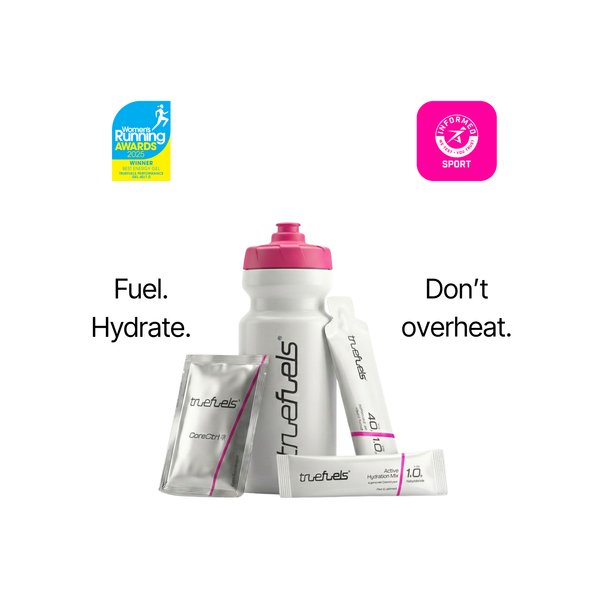
Race Ready System
40 Gels, 40 Elektrolyte, 8 CoreCtrl und eine Flasche. Ein komplettes System für Athleten, die sich auf anspruchsvolle Wettkämpfe, Hitzerennen oder längere Ausdauerziele vorbereiten.
Shop Race Ready System →One rule to remember
Water replaces fluid.
Gels provide carbohydrate and salt.
Electrolytes give you extra control when sweat losses are higher.
Frequently Asked Questions
Bei Einheiten unter 60 Minuten unter kühlen Bedingungen ist Wasser allein in der Regel ausreichend.
Bei längeren Einheiten oder warmen Bedingungen ist dies in der Regel nicht der Fall.
Schweiß enthält Natrium, Kalium und Magnesium. Wasser ersetzt Flüssigkeit, aber es ersetzt nicht die im Schweiß verlorenen Mineralien. Das Defizit kann sich bei langen Trainingseinheiten und wiederholten Trainingstagen verstärken.
Der Natriumverlust variiert stark zwischen Sportlern.
Ein praktischer Bereich liegt bei etwa 200 mg bis 2.000 mg Natrium pro Stunde, abhängig von der Schweißrate, Temperatur, Intensität und der individuellen Schweißnatriumkonzentration.
Stark schwitzende Personen unter heißen Bedingungen liegen in der Regel am oberen Ende dieses Bereichs.
Ein Truefuels Elektrolyt-Sachet enthält 1 g Salz (400 mg Natrium) pro Portion.
Das Trinken großer Mengen einfachen Wassers ohne Elektrolyte kann das Natrium im Blut verdünnen.
Dies wird als Hyponatriämie bezeichnet.
Symptome können Übelkeit, Kopfschmerzen und Verwirrung sein. In schweren Fällen kann es gefährlich werden.
Mehr Wasser ohne Elektrolyte ist nicht immer sicherer.
Bei langen oder heißen Trainingseinheiten sollten Flüssigkeit und Natrium zusammen betrachtet werden.
Ja, wenn Sie schwitzen.
Die Menge mag geringer sein als bei harten oder heißen Einheiten, aber Elektrolytverlust tritt trotzdem auf.
Ein Beutel in morgendlichem Wasser an Trainingstagen kann als einfache Erhaltungsdosis dienen, besonders wenn die Trainingsbelastung hoch ist, die Bedingungen warm sind oder Sie nach den Einheiten zu Erschöpfungszuständen neigen.
Als praktische Empfehlung nehmen Sie bei kühlen Bedingungen und Trainingseinheiten, die länger als 60 Minuten dauern, 1 Beutel pro Stunde ein.
Bei warmen oder heißen Bedingungen über 22 °C nehmen Sie je nach Schweißrate 1 bis 3 Beutel pro Stunde.
Personen, die stark schwitzen, benötigen möglicherweise die höhere Dosis.
Erwägen Sie außerdem die Einnahme von 1 Beutel nach dem Aufwachen und 1 Beutel nach dem Training während intensiver Trainingsphasen.
Nicht immer während des Trainings.
Jedes truefuels Performance Gel enthält Kohlenhydrate und Salz, sodass viele Athleten Gele als Hauptenergiequelle während des Trainings nutzen können, besonders bei kühlen oder moderaten Bedingungen.
Wenn das Training jedoch lang, heiß oder schweißtreibend ist oder wenn Sie Elektrolyte vor oder nach dem Training benötigen, bieten Ihnen truefuels Elektrolyte zusätzliche Kontrolle, ohne weitere Kohlenhydrate hinzuzufügen.
Eine nützliche Faustregel lautet: Wenn ein Training lang oder hart genug ist, um Kohlenhydrate zu benötigen, ist es in der Regel auch lang oder hart genug, um Elektrolyte zu benötigen.
Elektrolyte sind Mineralstoffe, die im Körper eine elektrische Ladung tragen.
Dazu gehören Natrium, Kalium, Magnesium, Chlorid und Kalzium.
Sie tragen zur Regulierung des Flüssigkeitshaushalts, der Nervensignale, der Muskelkontraktion und der Herz-Kreislauf-Funktion bei.
Beim Ausdauersport ist Natrium in der Regel der wichtigste Elektrolyt, auf den man achten sollte, da es in größten Mengen durch Schweiß verloren geht.
Sportler benötigen Elektrolyte, denn Schweiß enthält mehr als nur Wasser.
Bei längeren, heißeren oder intensiveren Trainingseinheiten reichern sich Natrium und andere Elektrolytverluste an.
Der Ersatz von Elektrolyten hilft, den Flüssigkeitshaushalt, die neuromuskuläre Funktion und die Leistungsfähigkeit zu unterstützen.
Wasser ist wichtig, aber Wasser allein ersetzt nicht das, was der Schweiß entzieht.
Ja, besonders bei langen Läufen, warmen Bedingungen, starkem Schwitzen oder Läufern, die sich nach dem Training oft ausgelaugt fühlen.
Für lockere Läufe unter 45 bis 60 Minuten bei kühlen Bedingungen reicht Wasser in der Regel aus.
Für lange Läufe über 60 Minuten ist 1 Beutel pro Stunde ein praktischer Ausgangspunkt.
Wenn du während des Laufs auch truefuels Gele verwendest, denke daran, dass die Gele bereits Salz enthalten.
Ja.
Radsporteinheiten dauern oft lange genug, um signifikante Schweiß- und Natriumverluste zu verursachen.
Für Fahrten über 60 Minuten ist 1 Beutel pro Stunde ein guter Ausgangspunkt.
Bei warmen Bedingungen, langen Sportveranstaltungen oder Indoor-Einheiten mit hoher Schweißrate können 1 bis 2 Beutel pro Stunde angemessener sein.
Wenn Sie truefuels Gele während der Fahrt einnehmen, liefern die Gele bereits Kohlenhydrate und Salz.
Yes.
Electrolyte intake should match sweat losses, conditions and the individual athlete.
More is not automatically better.
Very high sodium intake may cause stomach discomfort or excessive thirst in some athletes.
The aim is to replace what you lose, not maximise intake.
Ja, beides kann nützlich sein.
Ein Beutel in 500 ml Wasser nach dem Aufwachen kann helfen, den Tag ausgeglichen zu beginnen.
Ein Beutel nach dem Training kann helfen, Elektrolytverluste auszugleichen und die Leistungsbereitschaft für den nächsten Tag zu unterstützen.
Bei Einheiten, die länger als 60 Minuten dauern, solltest du auch während des Trainings Elektrolyte zu dir nehmen, wenn Gels allein für die Bedingungen nicht ausreichen.
Salt is sodium chloride.
Sodium is the part most relevant to endurance hydration because it is lost in sweat and helps regulate fluid balance.
Athletes often talk about salt, but nutrition labels usually list sodium.
Both matter, but they are not exactly the same thing.
Continue your learning
Kohlenhydrate zu verstehen ist nur ein Aspekt der Ausdauerleistung. Erfahren Sie mehr über die Wissenschaft:

Ernährung beim Training in der Hitze
Why hot conditions change your carbohydrate and electrolyte requirements.
Lesen Sie Ernährung für Training in der Hitze
Wie viele Kohlenhydrate pro Stunde brauchen Sie wirklich?
Erfahren Sie, wie Kohlenhydratabsorption, Darmtraining und Ernährungsstrategie die Ausdauerleistung bestimmen.
Read How Many Carbs Per Hour
Warum die Muskeln beim Sport verkrampfen
Verstehen Sie, warum Krämpfe auftreten, warum Wasser allein nicht ausreicht und wie Elektrolytstrategie in die Prävention passt.
Read Cramp Prevention
Ernährungsstrategien für Ausdauersportler
Carbohydrates are the body's preferred fuel during endurance exercise. This guide explains why carbohydrate intake matters and how to build a better fuelling strategy.
Ernährungsbezogene Best Practices lesenBuild your personal strategy
Every athlete is different.
Your hydration strategy should depend on:
- Session duration
- Temperature
- Sweat rate
- Sodium loss
- Intensity
- Training load
- Experience
- Whether you are already taking salt through gels
Use the truefuels Fuel Calculator to calculate:
- Recommended carbohydrate intake
- Electrolyte requirements
- Product recommendations
- Timing strategy
"The best hydration strategy is not the one that sounds most scientific. It is the one you practise often enough to understand. Replace what you lose. Keep the system simple. Make the next session better."
Alistair Brownlee